






Lunar Sample Return
The Indian Space Research Organisation (ISRO) is charting an ambitious course for its future lunar expeditions, with Chandrayaan-4 specifically designed
for a groundbreaking objective: collecting lunar samples and safely returning them to Earth. This mission represents a significant escalation in complexity and scientific aspiration compared to previous Chandrayaan endeavors. The ability to bring back lunar material will provide scientists with invaluable resources for in-depth analysis on our home planet, potentially unlocking new understandings of the Moon's formation, composition, and geological history. Such a feat would place India at the forefront of lunar sample return missions, a highly challenging and scientifically rewarding undertaking.
Advanced Lunar Exploration
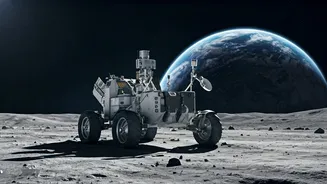
Chandrayaan-5 is poised to introduce a new era of lunar surface exploration with a substantially enhanced lander and rover. Unlike the Chandrayaan-3 lander, which operated for approximately 14 days, the upcoming missions are targeting an operational lifespan of around 100 days on the lunar surface, allowing for prolonged scientific investigations. Furthermore, the rover component is set for a dramatic upgrade. While Chandrayaan-3 featured a rover weighing about 25 kg, Chandrayaan-5 will deploy a much more robust rover weighing approximately 350 kg. This increased mass signifies enhanced capabilities, potentially including more sophisticated scientific instruments, greater mobility, and the capacity to cover larger areas of the lunar terrain for comprehensive data collection.
Broader Space Aspirations
Beyond the Chandrayaan series, ISRO is actively developing plans for other ambitious interplanetary missions. A Mars landing mission is under active consideration, building upon the success of the Mars Orbiter Mission. Additionally, a Venus Orbiter Mission is in the pipeline, aiming to study our planetary neighbor. These projects are currently undergoing discussions for governmental approval. India's space program also encompasses the Gaganyaan human spaceflight initiative, with the aim of sending astronauts into space and ensuring their safe return within the next couple of years. Looking further ahead, ISRO has set its sights on establishing an Indian space station by 2035 and achieving the historic milestone of landing Indian astronauts on the Moon and bringing them back safely by 2040.
Chandrayaan-3's Legacy
The success of Chandrayaan-3 in 2023 marked a historic achievement for India, making it the first nation to successfully execute a soft landing near the Moon's south pole. This mission was not just about a successful landing; it yielded significant scientific discoveries. Around eight distinct minerals were identified on the lunar surface, valuable data was gathered on seismic activity, and a comprehensive understanding of the Moon's thermal profile was obtained. Complementing these lunar efforts, the Aditya-L1 mission to study the Sun has already begun transmitting scientific data. India's track record also includes a total of 10 completed scientific missions to date, with instruments like AstroSat, which recently marked a decade in orbit and continues to function, showcasing the longevity and effectiveness of India's scientific endeavors in space.