







The Heart in Orbit
Long-duration space voyages, while exciting, present significant physiological hurdles, with microgravity's impact on blood flow being a major concern.
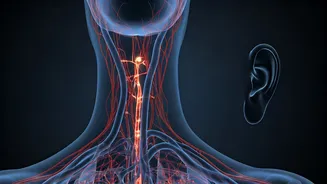
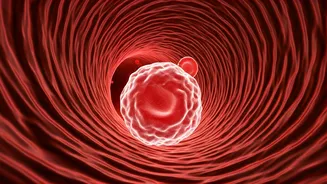
Research indicates a heightened risk of venous thromboembolism (VTE) for astronauts due to the altered circulatory dynamics in weightlessness. On Earth, gravity consistently directs blood towards our lower extremities. However, in orbit, this natural pull is absent, leading to a remarkable upward shift of bodily fluids. This can cause blood to accumulate in the neck's internal jugular veins, experiencing reduced flow. The stagnation of blood in these upper-body vessels creates an environment conducive to clot formation, although the precise biological mechanisms at play in space are still under scientific investigation. Addressing these circulatory anomalies is deemed crucial for ensuring astronaut safety, especially for anticipated extensive missions to destinations like Mars.
Microgravity's Flow Disruption
The absence of gravity profoundly reshapes how blood circulates within the human body, particularly affecting the pressure dynamics in the internal jugular vein. Whereas Earth's gravity assists in draining blood from the head back to the heart, microgravity triggers a 'fluid shift,' causing blood to pool in the upper chest region. This phenomenon has been observed to significantly impede, and in some instances, even reverse the flow of blood within the neck's jugular veins. Studies have indicated that such stagnant blood flow establishes a high-risk scenario for thrombus, or clot, development. These clots, if dislodged, could potentially migrate to the lungs, leading to a life-threatening embolic event. Therefore, understanding and counteracting this altered blood flow is paramount for astronaut well-being during extended spaceflights.
Detecting Silent Clots
Given the limited medical infrastructure available in space, astronauts are trained to perform many diagnostic procedures themselves, with remote guidance from physicians on Earth. The primary tool utilized for assessing crew health is high-resolution ultrasound (HRUS). This process involves astronauts skillfully operating the HRUS equipment while medical experts on Earth provide step-by-step instructions via a two-way video link. Notably, the first documented instance of an asymptomatic blood clot in space was identified not due to a crew member experiencing symptoms, but rather during a routine research study employing HRUS in 2019. This discovery underscored the necessity of proactive health monitoring, even in the absence of apparent illness, highlighting the silent nature of these potential threats.
Space Clots' Unique Nature
Research suggests that blood clots formed in the unique environment of space may possess distinct physical characteristics compared to those on Earth, potentially influenced by the microgravity conditions. Clots developed in orbit have been observed to exhibit thicker fibrin networks, making them more resilient to the body's natural clot-dissolving mechanisms. Scientists are actively engaged in ongoing studies to fully comprehend how microgravity influences both the formation and the potential treatment of these clots. Despite these ongoing investigations, standard anticoagulant medications have already been administered successfully to treat a clot detected in an astronaut during a mission, demonstrating the feasibility of intervention with existing medical knowledge.
Exercise and Prevention
On Earth, the act of walking significantly enhances blood circulation in the legs, which is instrumental in preventing clot formation. In space, astronauts engage in rigorous resistance exercises using specialized equipment like the Advanced Resistive Exercise Device (ARED). This device is designed to simulate the gravitational forces that would normally act on the body, ensuring that the forces applied during training are transmitted to the astronaut's bones and muscles. While this form of exercise is effective in preserving bone and muscle mass, it does not fully counteract the 'fluid shift' that causes blood to accumulate in the upper body and neck region. To address this, NASA is exploring technologies such as Lower Body Negative Pressure (LBNP), which utilizes specialized garments to create a vacuum, effectively drawing blood back into the lower legs and alleviating pressure on the jugular veins.