






Smart Cities, Safe Cities
Cities are increasingly leveraging advanced technology to bolster indoor public safety through the deployment of sophisticated smart sensor networks. These
intelligent systems are designed to proactively detect potential risks and hazards before they escalate, significantly improving overall situational awareness within public spaces. By continuously monitoring environments, these sensors contribute to the creation of healthier, more secure, and inherently sustainable buildings and facilities. This proactive approach not only enhances the well-being of citizens but also optimizes resource management for building operators, paving the way for a more resilient urban infrastructure that prioritizes human safety and environmental consciousness.
AI for Personalized Government
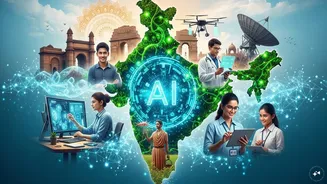
The integration of artificial intelligence (AI) into government services presents a powerful avenue for creating highly personalized and efficient experiences for citizens. A key discussion revealed that the successful adoption of AI in this domain hinges critically on cultivating public trust and ensuring broad inclusivity. AI holds the potential to tailor services to individual needs, offering everything from customized public transport suggestions to proactive social support outreach, thereby enabling governments to become more responsive and citizen-centric. This can lead to greater citizen satisfaction, more effective allocation of resources, and a fairer distribution of essential services across the population. However, addressing concerns related to data privacy, potential algorithmic biases, and the digital divide is paramount. For AI to deliver genuine benefits, its development and implementation must be transparent, accountable, and universally accessible, bridging the gap for individuals with varying levels of digital literacy or socioeconomic standing. Building robust trust requires clear communication regarding AI usage, data collection practices, and stringent data protection measures, assuring citizens that their information is secure and that AI systems operate impartially. Furthermore, fostering inclusivity means designing AI solutions that cater to the diverse needs of urban populations, considering language, abilities, and cultural contexts to ensure no one is marginalized. This necessitates proactive strategies like digital inclusion programs and user-friendly interfaces to narrow the digital disparity. Ethical considerations are also crucial, demanding clear guidelines and regulatory frameworks to govern AI development and deployment, ensuring human oversight and accountability in decision-making processes. Ultimately, realizing AI's potential to revolutionize government services demands a focused effort on building trust, promoting inclusivity, and confronting ethical challenges directly, paving the way for more equitable and responsive urban futures.
Digital Twins Transform Infrastructure
AI-powered digital twins are ushering in a new era for urban infrastructure management, offering transformative capabilities that enhance efficiency, bolster resilience, and advance sustainability goals. These sophisticated virtual replicas of physical assets allow city planners and operators to simulate various scenarios, test interventions, and optimize performance without impacting real-world systems. By providing an integrated, data-driven view of complex urban networks, digital twins empower better decision-making for everything from traffic flow management to utility network optimization. This innovative approach facilitates proactive maintenance, reduces operational costs, and enables cities to adapt more effectively to changing environmental conditions and evolving citizen needs, laying the groundwork for more intelligent and responsive urban development.
Smarter Transport Networks
Cities are increasingly harnessing the power of data and artificial intelligence (AI) to revolutionize their transport networks. These advanced technologies are instrumental in enhancing urban mobility by supporting meticulous planning, optimizing day-to-day operations, and ultimately improving outcomes for both communities and individual passengers. AI algorithms can analyze vast amounts of traffic data to predict congestion, optimize signal timings, and reroute vehicles dynamically. This leads to reduced travel times, lower fuel consumption, and a decrease in overall emissions. Furthermore, data analytics provide valuable insights into passenger behavior and demand patterns, enabling public transport operators to adjust routes and schedules more effectively, ensuring services are better aligned with citizen needs. This data-driven approach fosters more efficient, sustainable, and user-friendly transportation systems, making cities more accessible and livable.
Interoperable Smart Lighting
The evolution of smart city infrastructure is deeply intertwined with the innovative use of lighting systems. In the second episode of 'Cities Thriving on Lighting,' the focus is on transforming existing streetlight networks into robust, secure, and future-proof infrastructure. This involves ensuring these networks are not only interoperable but also adaptable to future technological advancements. The discussion emphasizes how cities can leverage their current lighting infrastructure as a foundational backbone for a broader smart city ecosystem. By prioritizing interoperability, cities can avoid fragmented systems and vendor lock-ins, ensuring seamless integration of various smart technologies. This forward-thinking approach is crucial for building scalable and sustainable urban environments that can readily adopt new innovations while maintaining operational efficiency and security for their residents.
Geospatial AI and the Citiverse
A significant conversation is emerging around the responsible utilization of geospatial AI and the burgeoning concept of the 'Citiverse.' Global city leaders are being urged to act decisively to harness these powerful technologies for the betterment of urban environments. This involves exploring how AI, combined with spatial intelligence, can be channeled into the Citiverse ecosystem to deliver trusted, people-centered outcomes. The objective is to create urban futures that are not only technologically advanced but also fundamentally designed around the needs and well-being of their inhabitants. By integrating AI with spatial data and digital environments, cities can gain deeper insights into urban dynamics, enabling more informed planning and more effective service delivery that directly benefits the community.