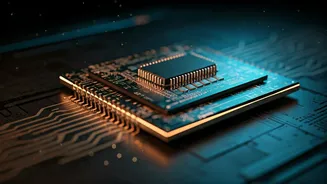

Birth of Dhruv64
Dhruv64's emergence signals a monumental step in India's technology sector. As India's maiden 64-bit dual-core microprocessor, it represents a substantial
achievement in indigenous design and manufacturing capabilities. This innovation is not merely about creating a chip; it embodies the nation's resolve to achieve self-sufficiency in the vital realm of semiconductors. The introduction of Dhruv64 signifies India's commitment to reducing dependency on foreign technologies and fostering local expertise. This microprocessor's development involves intricate design and engineering. Every element, from the core architecture to the manufacturing procedures, demonstrates India's growing competency in cutting-edge technology and its commitment to developing a robust ecosystem of semiconductor design and production within the country. This endeavor underscores the government's strategy of 'Make in India' and signifies India's growing significance in the worldwide technology sector.
Core Design Insights
The Dhruv64 is crafted with a dual-core architecture, which implies it can execute multiple processes simultaneously. This structure boosts efficiency, allowing for faster response times and improved overall system performance. The 64-bit design is key because it enables the microprocessor to handle larger amounts of data and perform more complex computations compared to its 32-bit counterparts. This feature is particularly crucial for applications requiring heavy processing, like data analytics, artificial intelligence, and sophisticated software operations. The development of Dhruv64 involves intricate design work, which includes decisions on the processor's instruction set, memory management, and input/output capabilities. Its design prioritizes both performance and power efficiency. This balance is critical for a wide array of applications, from embedded systems to more advanced computing platforms. The engineering behind Dhruv64 showcases India's developing proficiency in semiconductor design, creating a solid base for future advancements.
Strategic Significance Unveiled
The introduction of Dhruv64 is strategically significant for India. It is a vital move towards diminishing reliance on foreign semiconductor technology. This move improves national security by providing India with greater control over its technological infrastructure and reducing the dangers associated with external supply chain vulnerabilities. It promotes indigenous innovation, stimulating the growth of local industries and providing employment opportunities. Dhruv64's emergence acts as a catalyst for local research and development, spurring the development of a skilled workforce and fostering a culture of technical ingenuity. It also enhances India's position on the global stage, transforming the country into a key player in the semiconductor sector. It sets the foundation for future developments, enabling India to design and create advanced technologies. Through this microprocessor, India strengthens its tech ecosystem and fosters long-term self-sufficiency and economic growth.
Beyond the Microprocessor
Dhruv64's impact reaches beyond its technological functions. It contributes to the development of a wider ecosystem of semiconductor design and production inside India. This entails building a supply chain of materials, equipment, and skilled specialists required to sustain a domestic semiconductor sector. The project encourages collaborations between academic institutions, research centers, and businesses. Such cooperation is crucial for generating new ideas and guaranteeing that India remains at the cutting edge of technological innovation. Furthermore, the development of Dhruv64 stimulates investments in infrastructure, which is essential for manufacturing, testing, and other semiconductor-related operations. The initiative is a model for 'Make in India,' demonstrating the potential for local manufacturing to boost economic growth, produce jobs, and raise India's standing in the worldwide technology industry. This advancement shows India's commitment to a self-sufficient and innovative future, one chip at a time.











![[WATCH] T20 World Cup 2026: Gautam Gambhir hosts dinner for Team India players ahead of Namibia clash](https://g-mob.glance-cdn.com/public/fc/image/7gXS1xdhs5Q0.webp)