







The Golden Age of Arcades
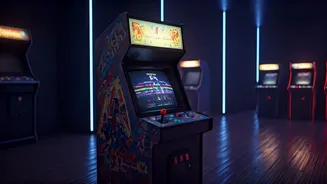
The era of the 80s and 90s gifted us with vibrant arcades, a far cry from the sparse gaming corners of today. Picture dimly lit rooms, filled with the cacophony
of countless machines, the scent of popcorn and something vaguely sticky on the floor. These were not just places to play games; they were social hubs where you could witness the skill of seasoned players, learn by sheer observation, and be humbled by those who truly mastered the digital realms. The thrill of burning through coins, the anticipation of a new high score, and the shared experience of competition and camaraderie created a unique atmosphere. This communal energy, where physical presence and shared frustration or triumph were key, offered a tangible social experience that online gaming, despite its convenience, struggles to replicate. The real arcades were a testament to shared, analog entertainment.
Mall Food Courts: A Social Epicenter
Before the rise of digital social media, the mall food court served as a dynamic, physical equivalent. It was a place for casual gatherings, for being seen, and for experiencing a sense of belonging without any pre-planned agenda. People would drift between tables, joining conversations or striking up new ones, creating an organic, fluid social environment. This spontaneous interaction, where chance encounters and shared meals defined social time, contrasts sharply with today's often meticulously scheduled and easily canceled social engagements. The food court was a hub of unscripted presence, a place where the simple act of sharing space and a meal facilitated connections that felt more immediate and less curated than our modern digital interactions.
Uncharted Journeys: Pre-GPS Adventures
The freedom of exploring without the aid of GPS or smartphones defined a generation's childhood. Leaving home with a vague notion of where friends might be, children would embark on self-guided expeditions, relying on bikes and a shared understanding of likely meeting spots. Navigating through streets, parks, or a specific neighborhood house, the act of finding friends felt like a low-budget detective mission. This lack of constant tracking and instant communication fostered a sense of genuine independence and adventure. It was about the thrill of the search and the satisfaction of discovery, a liberating experience that encouraged resourcefulness and a deeper connection with the physical world around them, a stark contrast to the digitally guided lives many lead today.
Imaginative Forts and Worlds
With just a tree and a few scattered pieces of wood, children in the past could construct entire, functional societies. These impromptu creations, though structurally questionable and adhering to illogical rules, were imbued with a powerful sense of ownership and imagination. They fostered hierarchies, secret passwords, and a level of seriousness that often surprised adults. The act of building and governing these self-made structures provided a profound lesson in collaboration, negotiation, and leadership. This DIY approach to creating shared spaces and social systems, where the mere existence of the fort was enough to fuel complex interactions, offered a deeply engaging and empowering experience far removed from pre-fabricated entertainment.
The Ritual of Movie Selection
The process of choosing a movie used to be an event in itself, a ritual involving physical exploration and shared decision-making. Wandering through aisles lined with VHS tapes, potential viewers would judge films by their cover art, pick them up, put them back, and engage in spirited debates with companions. This deliberate, often protracted, selection process carried an inherent risk of disappointment but also the rare joy of discovering an unexpected gem. Unlike the instant gratification of streaming, this method imbued the chosen film with a greater sense of value and commitment. The tangible act of browsing and the ensuing discussion made the movie night experience richer and more memorable, a stark contrast to the overwhelming, yet less impactful, digital catalog available today.
Earning Your Music
In the past, acquiring music was a deliberate and often interactive process. Instead of instant downloads, people would call radio stations, wait patiently, and hope their requested song would be played. This act of making a request felt like a direct influence on reality, a small victory when the desired track finally filled the airwaves. This effort invested in obtaining music made each song feel more significant and personally earned. The sheer accessibility of every song ever recorded today, while convenient, has diminished the specialness and the emotional weight associated with anticipating and receiving music. The struggle and the wait made the reward feel far more substantial.
The Chaos of Sleepovers
Sleepovers were a unique blend of youthful exuberance and unstructured social bonding. Characterized by an abundance of junk food, movies that pushed boundaries, and nonsensical conversations, these late-night gatherings fostered a sense of shared experience. Moments of unexpected quiet would punctuate the lively chaos, adding to the nights' surreal atmosphere. The core of these events was simply existing together, unburdened by schedules or the need for optimization. This shared presence, staying awake far beyond reasonable hours and reveling in collective consciousness, created deep, if often unarticulated, emotional connections that are difficult to replicate in more organized social settings.
The Art of Mixtape Creation
Crafting a mixtape was a profound act of emotional commitment, a tangible expression of care that required significant effort and precision. This involved carefully selecting songs, meticulously timing the recordings, and accepting the finality of the finished product with no room for edits or revisions. The dedication involved in creating a mixtape meant that giving one to someone was a significant gesture, a message that carried weight and could not be easily rescinded. This deliberate, time-consuming process imbued the gift with a lasting personal significance that bypasses the ephemeral nature of digital playlists. It was a true labor of love, a testament to the sender's feelings.
The Era of 'Marco Polo'
Before the incessant ping of notifications and constant connectivity, a simple game of 'Marco Polo' served as a rudimentary yet effective communication system. The distant, echoing calls, growing louder as players drew nearer, acted as an auditory notification, a signal that demanded acknowledgment. This system, devoid of clocks or reminders, established a natural rhythm for interaction. The echoing shouts were a child's schedule, a decentralized alert system that relied on sound and spatial awareness, fostering a sense of presence and anticipation that modern digital alerts often overshadow. It was a more organic and engaging way to stay connected and locate others.
Fandom Before Content Creation
In the past, fan engagement was less about curated content and more about organic community interaction within physical spaces. Fandoms would gather, often without a specific agenda, browsing merchandise they couldn't afford and listening to passionate discussions about beloved characters. This immersive environment allowed for knowledge absorption through sheer exposure, fostering a sense of belonging among those with shared niche interests. Unlike today's optimized and often commercialized fan experiences, these gatherings were unpretentious, a simple coming together of like-minded individuals who found value in simply being in the same place, sharing their enthusiasm and extending their stay simply because the connection felt genuine and satisfying.