






Unveiling Unexpected Resemblance
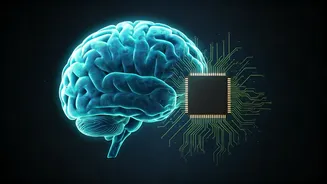
The scientific community is buzzing with the revelation of striking similarities between the human brain and artificial intelligence (AI). Previously considered
disparate fields, new research suggests a far closer relationship than imagined. Experts are now observing that the architecture and operational mechanisms of complex AI models, particularly deep neural networks, reflect patterns observed in the human brain. This unexpected correlation is fueling investigations into how the brain works, potentially leading to significant breakthroughs. It's a two-way street; advancements in AI are, in turn, providing novel tools and insights into the human brain's intricacies. The recognition of these parallels could redefine the boundaries of neuroscience and artificial intelligence, presenting fresh opportunities for collaboration and innovation. This unexpected mirroring opens up a whole new realm of possibilities and fresh pathways for both fields.
Neural Networks Mirror Brain
At the core of AI’s functionality are neural networks, intricate systems that are strikingly similar to the human brain. These networks are constructed with interconnected nodes, mimicking neurons in the brain, arranged in layers that process information in a similar manner to biological neural networks. In AI models, information is processed sequentially through various layers, each designed to extract specific features from the input data. Similarly, our brains also pass data through multiple layers for processing. The surprising resemblance goes beyond structure, extending into functions like pattern recognition and learning processes. The ability of AI to learn from data, refine its understanding, and generate new information aligns with how the human brain adapts and evolves through experience. Studying these AI systems gives scientists new methods for understanding the brain's own methods for learning and processing information, which has been difficult to accomplish via other avenues. These networks serve as functional analogs, aiding in decoding the complexities of the brain.
AI Aids Neuroscience Research
The field of AI is now becoming an invaluable tool for neuroscience research. Scientists are employing AI to analyze large datasets derived from brain imaging, genetic studies, and other neurological research, unveiling patterns that would otherwise go unnoticed. AI algorithms are adept at identifying intricate relationships between different brain regions and cognitive functions, helping researchers form a clearer picture of how the brain operates. Through AI, scientists can accelerate the testing of different theories and models related to the brain. AI allows for simulations of neural processes and the creation of models that mirror specific aspects of human cognition. This collaboration enables the rapid development and testing of different theories, thus fast-tracking breakthroughs in understanding the human brain. The potential of AI in neuroscience is huge, offering new avenues for discovery and the possibility of creating novel treatments for neurological disorders.
Brain's Influence on AI
The human brain is also influencing the design and improvement of AI systems. The study of the brain’s architecture and operational efficiency is driving innovations in AI. For example, research into how the brain handles information processing and storage is helping create more efficient AI algorithms. Scientists are looking at how the brain manages complex tasks with limited energy consumption as a model to develop energy-efficient AI systems. Additionally, AI developers are drawing inspiration from the brain’s plasticity—its capacity to adapt and change in response to experience—to enhance AI models' flexibility and ability to handle new information. The study of the brain provides a blueprint for creating AI systems that are not only effective but also more akin to human intelligence. This reciprocal relationship between neuroscience and AI drives improvements in both fields, pushing boundaries and enhancing our knowledge of intelligence itself.
Future Implications Explored
The discovery of the striking likeness between the human brain and AI carries profound implications for the future. The ability to use AI tools for studying the brain could revolutionize the diagnosis and treatment of neurological disorders, offering hope for patients suffering from conditions such as Alzheimer's, Parkinson's, and stroke. Moreover, the insights gained from studying the human brain can lead to breakthroughs in artificial intelligence, creating more intelligent, versatile, and human-like AI systems. This opens up opportunities for AI to perform more complex tasks and solve problems that were formerly out of reach. As the connection between these fields becomes more evident, it is likely that future research will focus on synergistic collaborations between neuroscientists and AI experts, paving the way for further discoveries and advancements in both domains. The implications are wide-ranging, promising exciting developments in healthcare, technology, and our fundamental understanding of intelligence.