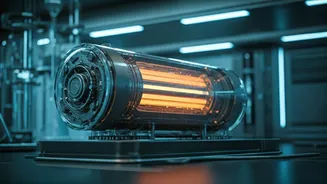

Battery Breakthrough: Fact?
The very idea of a new battery is enough to quicken the pulses of tech enthusiasts worldwide, and the question is: is it genuine? It's a tantalizing prospect,
if the battery is real, as it could usher in a new era of possibilities, or it could be a complete fiction. If the claims are valid, the technology could obliterate existing limitations and reshape the way technology is used. It would also lead to an increased interest in the research, development and availability of renewable energy sources, which are more sustainable. But before we get ahead of ourselves, it’s necessary to examine the facts.
Impact: Unforeseen Consequences
Should this battery prove to be a reality, it opens the doors to previously unimaginable applications. Imagine electric vehicles with dramatically extended ranges, eliminating range anxiety and encouraging sustainable transportation on a large scale. Think about portable electronics, like smartphones and laptops, that could operate for days, not hours, with a single charge. Consider the implications for grid-scale energy storage, paving the way for a more reliable integration of renewable sources like solar and wind power. The consequences of such advancements would affect various industries and consumer lifestyles. It would also spur innovation, driving the creation of new products and services to capitalize on these capabilities.
Technological Evolution Unleashed
If this battery functions as advertised, it would be a game-changer, leading to an evolution of technology and impacting the future. A battery's success could revolutionize diverse fields, from consumer electronics to space exploration. Advanced batteries would facilitate the production of smaller, more powerful devices that consume less power. The advancement in battery technology has the potential to solve some critical problems. It would also lead to novel developments in material science, engineering, and manufacturing. Furthermore, it could pave the way for a more decentralized energy system, empowering communities and individuals to produce and store their own energy, thus increasing energy security and resiliency.
Challenges: Potential Obstacles
Despite the promise, the path forward might not be straightforward. There are always challenges and potential obstacles. The first is manufacturing and scalability. Moving from a laboratory prototype to mass production is a substantial hurdle, often involving complex processes, high costs, and material supply chain challenges. Then there’s also the matter of cost. Novel technologies frequently begin with a high price tag. Making such batteries affordable for a wide range of consumers would be paramount. The testing and safety protocols also would take time. Thorough testing is necessary to ensure the batteries are safe, reliable, and meet performance claims under a variety of conditions. However, overcoming these obstacles could lead to a technological boom.
The Future of Power
The emergence of this potentially revolutionary battery signifies a shift in energy technology. Its success would not only change how we power devices and vehicles, but it could also change how we conceptualize energy. As the technology matures, it has the power to solve some of the world's most pressing problems, such as climate change and energy scarcity. If the technology lives up to its promise, the future could include breakthroughs in sustainability and make the world a better place. The potential of the battery is immense, which may require continuous innovation and investment, promising a brighter future.