





The Chip Imperative
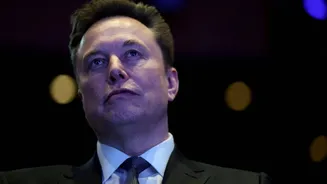
Elon Musk has revealed a significant challenge facing his ventures: the current global chip supply only meets about 2% of their substantial demand. To
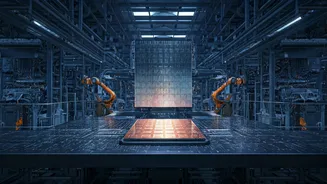
bridge this gap and foster self-sufficiency, he announced the development of TeraFab, an ambitious, integrated chip manufacturing facility. This new endeavor is a collaborative effort between Tesla and SpaceX, signaling a strategic move to control critical component production. The announcement, made during a livestream from Austin, Texas, underscored the necessity of this project, with Musk stating, 'We either build the TeraFab, or we don’t have the chips, and we need the chips, so we’re going to build the TeraFab.' The advanced facility is slated for construction on Tesla's campus in eastern Travis County, representing a massive investment in securing the company's technological future and enabling ambitious expansion plans.
Unprecedented Integration
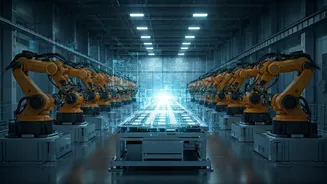
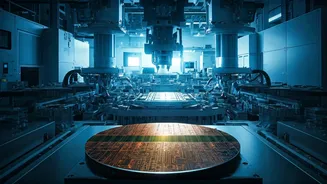
What distinguishes TeraFab from the existing landscape of semiconductor fabrication plants is its revolutionary all-inclusive operational model. Unlike traditional facilities that often rely on multiple specialized locations for different stages of chip production, TeraFab is designed to house the entire process under one roof. This comprehensive approach will encompass everything from the creation of lithography masks and the manufacturing of logic and memory chips to the final stages of packaging and rigorous testing. Musk asserts that such an integrated facility does not currently exist anywhere else globally. This singular architectural and operational advantage is expected to unlock significant benefits, most notably a drastically accelerated design and iteration cycle. Musk highlighted that the ability to quickly design, produce, test, and refine chips within the same building could lead to a performance improvement 'an order of magnitude better than anything else in the world.'
Targeted Chip Production
The TeraFab facility is engineered to produce two distinct categories of specialized chips. The primary focus will be on chips optimized for edge inference computations, which are critical for the sophisticated operations of Tesla's autonomous vehicles and the advanced functionalities of the forthcoming Optimus humanoid robots. Musk's projection for the demand of these edge inference chips is staggering, anticipating production needs ranging from one billion to ten billion units annually, driven largely by the anticipated scale of humanoid robot deployment. The second type of chip being developed is specifically engineered for resilience in the harsh conditions of outer space. These chips will be hardened to withstand extreme radiation and high-energy ions, environmental factors that would render conventional silicon components inoperable. While establishing its own manufacturing capabilities, Musk also confirmed that Tesla, SpaceX, and xAI will continue to source chips from established manufacturers like TSMC, Samsung, and Micron, encouraging these partners to expand their own production capacities as rapidly as possible.
Ambition and Timeline
The vision presented for TeraFab is undeniably compelling, showcasing an ambitious drive to push the boundaries of semiconductor physics and chip design. The prospect of iterating on unconventional designs at an unprecedented pace fuels excitement for what could be a transformative shift in technology development. However, a significant detail conspicuously absent from the announcement is a definitive timeline for when TeraFab will commence chip production. Given Musk's history with ambitious project timelines, such as the long wait for the Tesla Roadster, a degree of measured anticipation is warranted. While the concept and potential impact of TeraFab are clear and exciting, concrete milestones for its operational launch will be crucial for validating this bold initiative and its expected revolutionary outcomes in chip manufacturing.