






The Brain's Building Blocks
The foundation of what we perceive as the human mind lies within the intricate architecture of the physical brain. This biological powerhouse is comprised
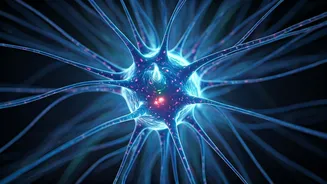
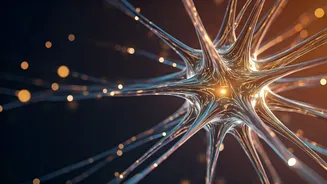
of approximately 86 billion nerve cells, known as neurons. These fundamental units are interconnected in a vast and complex network, constantly communicating with one another. Their communication occurs through the transmission of electrical signals and the release of specialized chemical messengers, called neurotransmitters, across tiny gaps termed synapses. Supporting this crucial neural activity are glial cells, which play a vital role in providing nourishment to neurons and maintaining the overall structural integrity of this sophisticated system. It's this dense web of cellular interaction that sets the stage for the emergence of mental phenomena.
Mind as Emergent Property
While the brain is a collection of billions of individual cells, the mind itself is understood by most scientists as something more profound – an emergent property. This means that the mind isn't a characteristic of any single neuron, but rather arises from the collective and synergistic activity of the entire neural network. Just as countless individual water droplets coalesce to form the immense ocean and its dynamic waves, the intricate dance of billions of neurons gives rise to consciousness, emotions, and thought. Individual neurons, in isolation, do not possess the capacity for feeling or cognition. It is their combined action and interaction that conjures the rich inner world we experience. This concept highlights that the whole is indeed greater than the sum of its parts when it comes to the mind.
Hardware Meets Software
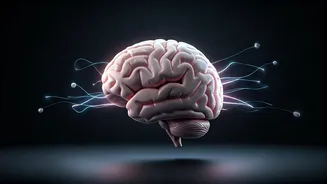
To better grasp the relationship between the brain and the mind, an analogy is often helpful: if the brain is considered the body's hardware, then the mind can be seen as its sophisticated software or perhaps its active processing unit. This 'software' encompasses the full spectrum of human cognitive abilities, including our capacity for logic, our mastery of language, and our ability to process complex information. Furthermore, it extends to the deepest and most nuanced of human feelings and emotions. Scientific research strongly suggests that the mind is, in essence, the operational output of the brain – what the brain actively does. Therefore, understanding the mind necessitates a deep appreciation for the brain's multifaceted functions and the dynamic processes it undertakes.