





Platform Power, Not Code
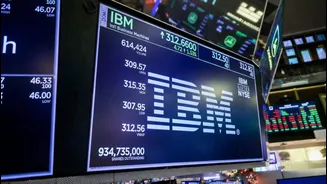
IBM's recent stock market performance experienced a significant dip, reportedly its worst in over 25 years, largely due to concerns that new AI tools could
undermine its established dominance in corporate IT. The catalyst was the announcement of Anthropic's Claude Code tool, capable of modernizing COBOL, a programming language that has long powered IBM's mainframe systems. However, IBM Senior Vice President Rob Thomas countered these fears, asserting that the true value of their mainframe business is independent of COBOL. He explained that the platform offers unparalleled performance and security, irrespective of the programming language used, be it COBOL, Java, or others. The fundamental engineering of the platform, not the language it runs, is the source of its long-standing value. This distinction is crucial for understanding IBM's strategy and the enduring relevance of its core infrastructure in an era of rapid AI advancement. The company's long-term investment in code modernization, including its own generative AI capabilities, underscores its commitment to adapting and innovating, even as new AI tools emerge weekly.
AI's Role in Modernization
The emergence of AI tools capable of translating legacy code, particularly COBOL, has reignited discussions around modernizing these systems. However, it's vital to differentiate between code translation and comprehensive platform modernization. Translating code is a relatively straightforward task, but it doesn't address the broader complexities of updating an entire enterprise system. IBM's perspective is that the real challenge lies in the intricate ecosystem surrounding applications, not just the code itself. Enterprise COBOL on IBM Z is deeply integrated within a robust stack, including z/OS, CICS, IMS, Db2, and others. This integrated architecture enables billions of encrypted transactions daily, massive AI inference capabilities with ultra-low latency, and exceptional availability. Merely translating COBOL code does not migrate these critical functionalities. The actual work involves re-architecting data, replacing runtimes, ensuring transaction processing integrity, and maintaining hardware-accelerated performance – all aspects that have been meticulously engineered and optimized over decades through tight software and hardware coupling. AI can significantly enhance these modernization efforts by accelerating code refactoring, improving DevOps practices, preserving knowledge as experienced developers retire, and enhancing overall quality of service, thereby strengthening the case for continued investment in IBM Z.
Beyond Code: System Engineering
The notion that AI-driven code translation alone can solve the modernization challenge for enterprises running on platforms like IBM Z is a misinterpretation of the problem. While AI tools can indeed translate COBOL, this capability captures only a fraction of the inherent complexity. The true modernization hurdle is not a language-specific issue; it encompasses the entire operational environment and its interdependencies. IBM Z's mainframe environment is a vertically integrated stack designed for unparalleled transactional resilience, security, performance, and efficiency at scale, a level of integration that distributed environments struggle to match. This platform architecture supports extraordinary feats, such as handling 25 billion encrypted transactions daily, performing 450 billion AI inferences per day with millisecond response times, achieving up to eight nines of availability, and employing quantum-safe encryption. Simply converting COBOL code does not transfer these capabilities. The critical work involves sophisticated system-level engineering: redesigning data architectures, replacing runtime environments, guaranteeing transaction processing integrity, and leveraging the platform's built-in non-functional requirements. This deep coupling of software and hardware, honed over decades, cannot be replicated by simply moving code. It's akin to building an alternative to the iPhone; while possible, displacing the established, tightly integrated ecosystem is highly improbable due to the performance derived from this unique synergy.
AI's Supportive Role
Contrary to the idea that AI might diminish the importance of mainframes, IBM views it as a powerful catalyst for strengthening their position. AI technologies can accelerate various on-platform modernization initiatives, including code refactoring, enhancing DevOps workflows, preserving the knowledge of retiring COBOL developers, and improving overall quality of service. By compressing project timelines and mitigating the impact of a dwindling skilled workforce, AI actually presents compelling arguments for expanding operations on IBM Z. Furthermore, the argument for a SaaS-only solution faces significant challenges when considering the deep-seated on-premises dependencies of many critical enterprise applications. The increasing global focus on digital sovereignty and data residency also raises questions about entrusting sensitive, mission-critical transactions to external providers operating under foreign jurisdictions. It's also important to note that a substantial portion of COBOL applications, approximately 40%, run on distributed platforms like Windows and Linux. The current narrative often conflates the challenges of modernizing COBOL on these distributed systems with the distinct requirements of mainframe modernization, leading to potentially misaligned solutions. While COBOL translation tools address a real need, they solve a different problem than the one that critically impacts enterprises relying on IBM Z.
Real-World Impact Verified
The distinction between mere code translation and genuine modernization is not theoretical; it's a practical reality being navigated by leading organizations. Clients are actively demonstrating the value of IBM's approach and tools. For instance, the Royal Bank of Canada leveraged watsonx Code Assistant for Z to gain a comprehensive understanding of their existing core system applications. This facilitated the proactive identification of dependencies, data flows, and structural elements, creating a detailed blueprint for modernization and ongoing change management. Similarly, the National Organization for Social Insurance (NOSI) experienced a remarkable reduction in the time required to analyze and identify superfluous COBOL code. Using watsonx Code Assistant for Z, this process was shortened from approximately eight hours to just 30 minutes, a 94% efficiency improvement. ANZ Bank has also benefited by adopting modern DevOps tools, which have led to a 60% reduction in manual operations and accelerated their application modernization efforts. These real-world examples underscore that while AI's role in code and broader value creation is undeniable, the critical system-level engineering and platform capabilities that IBM provides are essential for true modernization and should not be overlooked or lost in translation.