





Cosmic Computing Frontier
The leading developer of artificial intelligence chips has announced its ambitious venture into space with the objective of powering data centers in orbit.
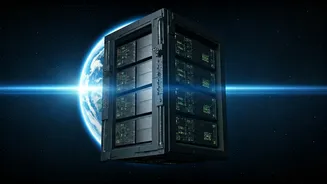
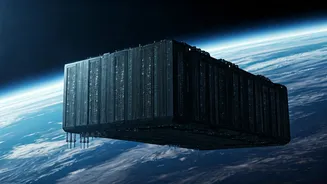
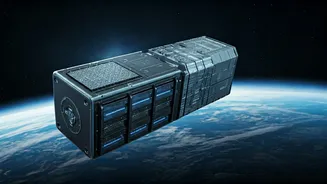
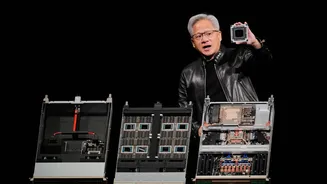
While an Nvidia graphics processing unit made its maiden voyage into the cosmos late last year through a collaboration with a startup, the company is now actively developing a dedicated module. This specialized component is intended to serve as a fundamental building block for constructing data centers in outer space. The announcement was made by the chief executive during the company's annual developers conference, signaling a significant commitment to off-planet computing infrastructure. This initiative represents a bold step, extending computational intelligence beyond our planet to unexplored territories. The vision is to leverage the unique environment of space to overcome terrestrial limitations and usher in a new era of advanced computing capabilities.
Vera Rubin's Cosmic Debut
A pivotal element in this celestial expansion is the 'Vera Rubin Space One' computer, a collaborative project aimed at establishing a presence in outer space. This cutting-edge module is slated for its initial deployment in November aboard a satellite launch. This mission is anticipated to mark the 'cosmic debut' of the new Nvidia module, signifying a major milestone in space-based technology. The satellite carrying this advanced technology is expected to be roughly the size of a small refrigerator, yet it will house an astonishing amount of computing power. Projections indicate it will possess 100 times the processing capability of any prior space-based operation. This dramatic increase in power is crucial for supporting complex AI tasks and large-scale data processing in the unique conditions of space. The co-founder of the partner startup expressed a bold prediction, foreseeing that within a decade, the majority of new data centers will be constructed in outer space, highlighting the transformative potential of this endeavor.
Powering AI in the Void
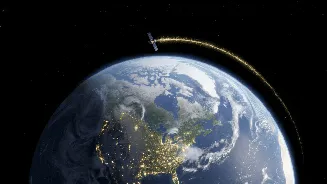
The overarching goal of this space-based initiative is to enable the operation of sophisticated artificial intelligence models, particularly large language models, in the vacuum of space. A key objective is to demonstrate that these advanced AI systems can function effectively beyond Earth's atmosphere. The 'Vera Rubin' module itself is specifically engineered and optimized for artificial intelligence applications. Its design facilitates real-time data sensing, immediate decision-making processes, and autonomous operational capabilities. This is crucial for applications in space where rapid responses and self-sufficiency are paramount. The technological firms involved are exploring the potential of space-based data centers, looking to harness the abundant solar energy available in orbit. By synchronizing satellites with the sun's orbit, a constant supply of solar power can be beamed to energy panels, addressing the immense power demands of AI computations. This approach not only offers a sustainable power solution but also sidesteps the complex challenges associated with land acquisition and navigating local regulations or community opposition, which are common hurdles for terrestrial data center projects.
Navigating Space Challenges
While the prospect of space data centers is exciting, significant technical hurdles must be overcome to ensure their long-term viability and functionality. The harsh environment of outer space presents unique challenges that require robust engineering solutions. One major concern is the impact of high levels of radiation on sensitive electronic components. Orbiting data centers must be shielded effectively to prevent damage and maintain operational integrity. Equally critical is managing the extreme temperature fluctuations experienced in space, which can range from scorching heat in direct sunlight to frigid cold in shadow. Furthermore, the risk of collisions with space debris, or space junk, poses a constant threat to these valuable assets. Developing resilient designs and advanced collision avoidance systems will be essential for protecting these orbiting facilities. Addressing these environmental and physical hazards is paramount for the successful establishment and sustained operation of data centers beyond Earth.