






Milky Way's Cosmic Display
During its groundbreaking lunar flyby, NASA's Artemis II mission achieved a significant milestone not just in space exploration but also in capturing celestial
beauty. The crew aboard the Orion spacecraft turned their cameras outward, away from the Moon and towards the vast expanse of deep space, to seize a truly spectacular image of our home galaxy, the Milky Way. This stunning photograph, taken after the spacecraft had completed its circumnavigation of the Moon and was en route back to Earth on April 7, 2026, showcases the galaxy as an intensely bright, luminous band stretching across the profound darkness. Such an unobstructed and clear view of the Milky Way is a rare sight from our planet, largely obscured by atmospheric interference and light pollution. The creation of this image underscores the dual purpose of space missions: gathering vital scientific data and generating visually compelling evidence of the cosmos, all while demonstrating the sophisticated imaging capabilities of modern spacecraft during crewed expeditions.
Musk's Visionary Echo
Elon Musk, a prominent figure in private space endeavors, shared his profound reaction to the stunning Milky Way photograph released by NASA. Resharing the image, he simply stated, "One day, we will be out there." This declaration, while consistent with Musk's long-held advocacy for extending humanity's reach beyond Earth, resonated particularly strongly within the context of the Artemis II mission. His words align seamlessly with the broader objectives of both governmental and commercial space programs, emphasizing a future where humans are not confined to our home planet. Within the space industry, this sentiment is widely shared, viewing lunar missions like Artemis II as essential preliminary stages for more ambitious journeys into deeper space. Musk's comment serves as a potent reminder of this collective aspiration and the long-term vision driving current space exploration efforts.
Artemis II's Crucial Role
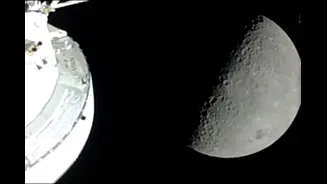
The Artemis II mission represents a pivotal advancement in humanity's return to lunar exploration, marking the first crewed flight around the Moon in over fifty years. While this particular mission does not involve a lunar landing, its primary objective is rigorous testing and validation of critical spacecraft systems and astronaut performance in deep space conditions. The astronauts are utilizing NASA's advanced Orion spacecraft for a journey that includes a complete circumnavigation of the Moon before safely returning to Earth. Each phase of this mission is meticulously designed to build confidence and certainty regarding the safety protocols and technological readiness for future endeavors, including the ambitious goal of landing astronauts back on the lunar surface. The data collected and the experiences gained from Artemis II are invaluable, serving as essential stepping stones that complement the scientific information gathered and pave the way for more complex and extended missions.