
Explosive Stellar Deaths
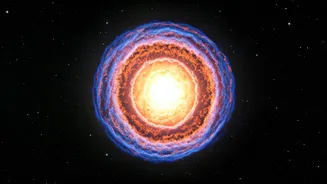
Massive stars don't fade away quietly; they often end their lives in a supernova, a tremendously bright and energetic explosion. Scientists are constantly
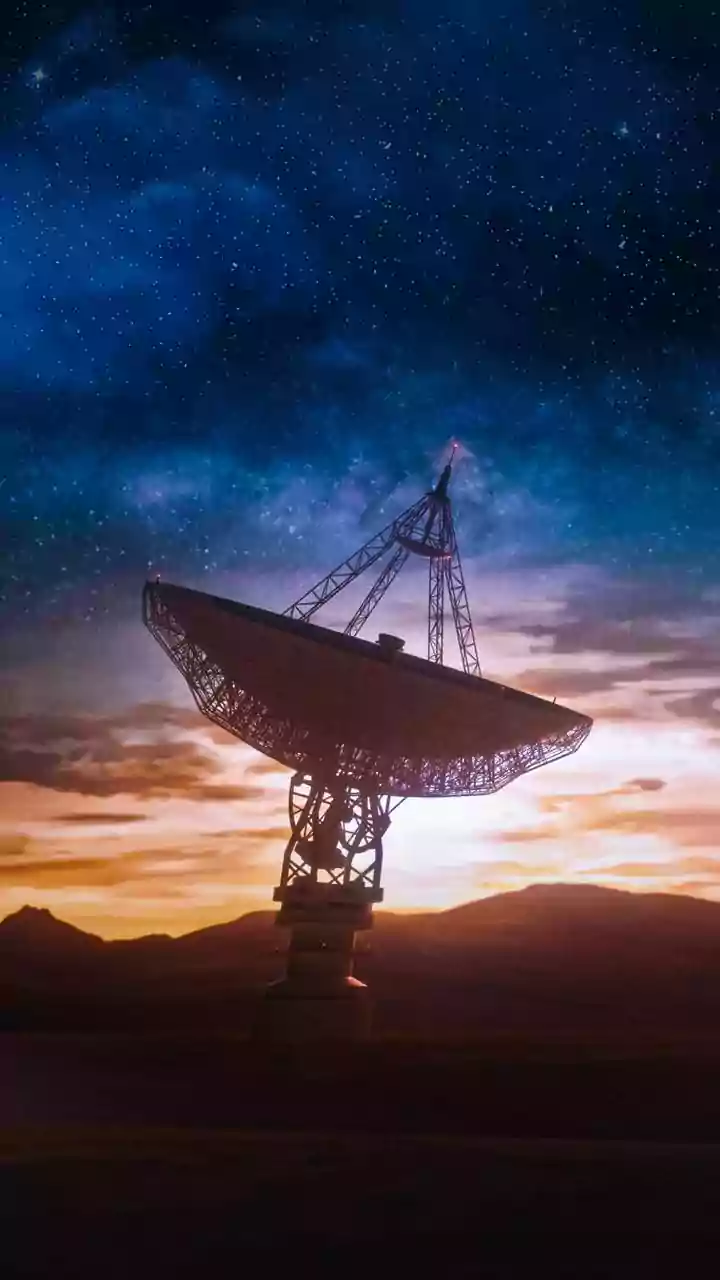
seeking to understand the mechanisms that trigger these titanic events. Recent research has focused on the final years leading up to the explosion, the types of stars that explode, and what remains after the explosion. These studies utilize various methods, including the analysis of radio signals to observe the stars' behavior before they vanish. This helps astronomers to comprehend the physics underlying these cosmic phenomena, and how such events impact galaxies and the universe as a whole. Understanding how these massive stars explode provides clues about the elements that are forged in their cores and spread throughout the cosmos, which in turn gives insights into the origins of life and the evolution of galaxies.
Unusual Debris Locations
One of the fascinating aspects of supernova research involves the discovery of stellar debris. Surprisingly, some of this debris has been found in unexpected locations. Researchers found, in some cases, that the remnants of the explosions are not where they are expected to be, providing puzzling new information. The "Hoinga" surprise highlights how material from a stellar explosion can travel far from the explosion site. The unusual locations may suggest that the explosions are more complex than previously assumed. Moreover, the study of the distribution and composition of this debris helps scientists understand how the star exploded and the forces at play. This also allows the scientists to learn the nature of the interstellar medium and the impact it has on the debris as it moves through space. These findings challenge current models and drive new questions for future exploration in the field of supernova studies.
Neutron Stars: The Remains
A significant focus of supernova research revolves around the remnants left behind after the explosion, particularly neutron stars. These incredibly dense objects are formed from the collapsed cores of massive stars. One of the goals of current research involves locating and studying these neutron stars. One of the most famous supernovas, SN 1987A, is of particular interest as scientists have been searching for a neutron star in its remnants for decades. The search for a neutron star within the debris of SN 1987A represents an important endeavor to fully comprehend supernova remnants and how neutron stars behave. The discovery of a neutron star would give an unprecedented opportunity to study the properties of such objects. This, in turn, will allow researchers to refine the models that are used to simulate supernova events and the evolution of neutron stars within the universe.
Milky Way's Warp
The study of supernovas also provides insight into the large-scale structure of our galaxy. The "Still Shaking" event refers to a warp discovered in the Milky Way, which has been linked to a past galactic collision. While not directly a supernova, such an event can be observed through the analysis of the aftermath of such galactic encounters. The aftermath of a collision has the potential to trigger the formation of new stars or affect the distribution of materials in the galaxy. Scientists can piece together the history of such events using computer models. These models incorporate information from multiple sources including the analysis of the distribution of stars, the kinematics of gas clouds, and the identification of stellar remnants. This comprehensive approach helps researchers to better understand how galaxies like our own evolve. Through studying the aftermath, it is possible to reconstruct the timelines of those events.
Pulsar Wind Nebulae
Another area of investigation involves the pulsar wind nebulae, which are created by the interaction between a neutron star's powerful winds and surrounding material. Scientists are working to solve a 34-year-old mystery by looking into evidence of pulsar wind nebulae. The discovery and characterization of pulsar wind nebulae associated with supernova remnants offer significant insights into the nature of these events. Pulsar wind nebulae are important as they help scientists understand the behavior of the stellar remnants over time. By observing the distribution of energy and the composition of the nebulae, researchers are able to better understand the magnetic fields and particle acceleration processes occurring in the system. Consequently, they contribute to a deeper understanding of the evolution and dynamics of supernova remnants.
Titanium's Blasting Power
The study of supernova remnants provides clues about the nature of the explosion itself. This includes the presence of particular elements created inside the exploding star. In some supernovas, fragments of titanium have been discovered blasting away from the explosion site. The detection of these elements in the supernova remnants provides a way to study the conditions that prevailed during the supernova explosion. Furthermore, the analysis of elemental composition helps scientists understand the types of nuclear reactions that took place inside the star. This information informs models for predicting the characteristics of future explosions. Understanding titanium, an element, provides important data for models of cosmic element production and the stellar processes that generate and distribute these elements across the universe.
Hydrogen-Free Supernovas
Supernovas come in different types, and one class is particularly intriguing: hydrogen-free supernovas. These explosions, which occur in the absence of hydrogen, help researchers learn more about how massive stars end their lives. Studying these supernovae provides insight into the composition and evolution of the progenitor stars. These events give insights into the diverse mechanisms through which massive stars die. They are providing new information about the various stellar processes at play. This approach helps scientists understand the variety and the different types of supernovas. Learning about the different types of explosions, including those without hydrogen, greatly expands the understanding of the lives of stars. The details that scientists learn from each supernova contribute to a more comprehensive understanding of stellar evolution and cosmic processes.