





Rare Earth's Significance
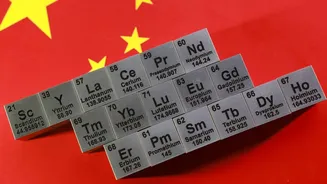
Rare-earth elements (REEs) are a group of seventeen chemical elements that are essential in various high-tech applications, including electronics, renewable
energy, and defense technologies. These elements are not actually rare in the Earth's crust; however, they are often found in low concentrations, making them difficult and expensive to extract and process. REEs are vital for manufacturing components like magnets used in electric vehicle motors, wind turbines, and smartphones. Their unique properties, such as high magnetic strength and catalytic activity, make them irreplaceable in numerous modern technologies. The strategic importance of REEs is heightened by the global competition for these resources, making their secure and sustainable supply a priority for many nations, including India.
Corridors: A Strategic Move
The government's proposal to establish rare-earth corridors in states like Odisha, Kerala, Andhra Pradesh, and Tamil Nadu is a strategic move to fortify India's position in the REE sector. These corridors will be dedicated zones focusing on fostering research, development, and mining activities related to rare-earth elements. The initiative aims to create a robust ecosystem that supports the entire value chain, from exploration and extraction to processing and manufacturing. By concentrating efforts in specific regions, the government intends to streamline operations, enhance efficiency, and attract investment. The focus on states rich in mineral resources allows for strategic advantage as the initiative develops domestically. These corridors will likely promote technological innovation, create employment opportunities, and reduce dependence on other nations for critical materials.
States: Key Players
The selection of Odisha, Kerala, Andhra Pradesh, and Tamil Nadu for the rare-earth corridors reflects their rich mineral reserves and strategic importance. These states possess significant deposits of monazite, a primary source of rare-earth elements. The government’s targeted investment in these areas is expected to drive economic growth and regional development. By supporting these states, the central government aims to establish a consistent supply of REEs for domestic industries. This approach ensures a long-term supply of critical elements needed for India's technological advancements. Focused regional development will involve specialized infrastructure, including research facilities, processing plants, and efficient logistics networks.
Reducing Dependence
India's initiative to develop rare-earth corridors aligns with the broader goal of reducing dependence on other countries for critical materials. Currently, India imports a significant portion of its REE requirements, making it vulnerable to supply chain disruptions and geopolitical risks. By boosting domestic production through these corridors, the nation can lessen its reliance on imports and improve its self-sufficiency. This move is crucial for enhancing the country’s strategic autonomy in high-tech industries. Strengthening domestic production safeguards critical sectors, enabling India to maintain its technological edge and economic growth. This plan also makes India more resilient to fluctuating international market conditions and supply chain instabilities.
Future Prospects
The rare-earth corridors represent a long-term investment in India's future, promoting scientific advancement, technological innovation, and economic prosperity. As these corridors develop, they are anticipated to become hubs for research and development. The initiative is set to fuel breakthroughs in material science and engineering, thus improving the manufacturing capabilities of the country. Beyond economic advantages, these endeavors will improve India's position as a player in the global technology arena. This strategy underscores India's dedication to sustainable resource management, responsible mining, and environmental protection. The successful implementation of these rare-earth corridors is anticipated to create a ripple effect, promoting economic growth and strategic self-reliance across multiple sectors.