





Galaxy Collisions
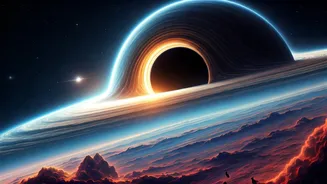
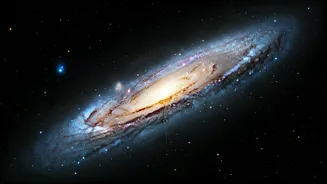
Recent findings, as revealed by Euclid data, suggest that galaxy mergers have the potential to spark activity within supermassive black holes. These colossal
black holes, residing at the centers of galaxies, can be activated by the collision and subsequent merging of galaxies. This process may lead to the black holes consuming vast amounts of matter and consequently emitting intense radiation. The Euclid mission has gathered unprecedented data, enabling astronomers to observe the intricate ways galaxies interact and the effects of these interactions on the evolution of supermassive black holes.
Oldest Supernova
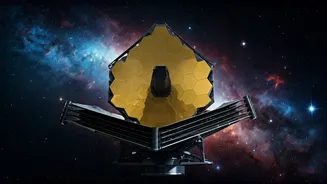
Astronomers, utilizing the James Webb Space Telescope (JWST), have confirmed the existence of the oldest known supernova in the universe. This supernova, linked to the gamma-ray burst GRB 250314A, offers invaluable insights into the early universe. Discoveries such as this enable scientists to study the formation and evolution of stars and galaxies. The detection of this supernova marks a major achievement in observational cosmology, allowing a glimpse into the universe’s earliest periods and the events that shaped it.
Star’s Wobbling Orbit
Observations of a star's peculiar wobbling orbit have successfully affirmed Einstein's century-old prediction of frame-dragging. Frame-dragging, also recognized as the Lense-Thirring effect, describes how the rotation of a massive object can distort the space-time around it. This verification offers strong confirmation of Einstein's theory of general relativity. These findings deepen the understanding of how gravity functions in extreme environments near massive cosmic objects, thereby solidifying the foundations of modern physics.