
An Unexpected Phenomenon
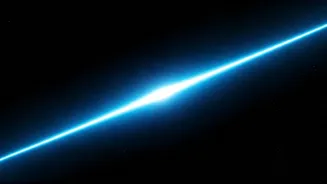
Gamma-ray bursts (GRBs) are the universe's most intense electromagnetic events, representing the collapse of massive stars or the collision of neutron
stars. Typically, GRBs last from a few milliseconds to a few minutes. However, the recently observed GRB, designated GRB 221009A, stood out dramatically due to its exceptional duration. This burst emanated from a galaxy roughly 2.4 billion light-years away. The event's extended lifespan has prompted scientists to re-evaluate their understanding of these energetic celestial occurrences. The observation of such a long-lasting GRB is a testament to the capabilities of modern astronomical instruments and highlights the dynamic nature of the cosmos. This specific GRB has been described as a 'monster burst' due to its extreme properties, providing a rare opportunity to study the processes behind such phenomena.
Detecting the Blast
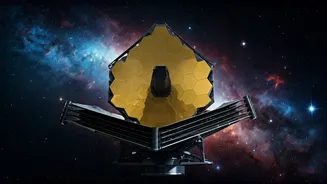
The detection of GRB 221009A was made possible by a collection of observatories, which include the Neil Gehrels Swift Observatory and the Fermi Gamma-ray Space Telescope. These instruments are designed to detect gamma rays, the most energetic form of light. The swift detection by these telescopes was critical in alerting astronomers worldwide, enabling follow-up observations across the electromagnetic spectrum. A wide range of telescopes and instruments were quickly pointed toward the GRB's location. This swift response enabled detailed studies of the afterglow, providing valuable information about the burst's origin and characteristics. These follow-up observations provided significant data on the event's evolution, allowing astronomers to explore its origins and characteristics more deeply.
Unveiling the Secrets
The extended duration of GRB 221009A has presented researchers with a rare opportunity to investigate the processes driving such extreme events. Analyses of the afterglow reveal information about the environment around the burst and the mechanisms behind its production. The prolonged period of emission enables astronomers to study the physical processes occurring during the collapse of a star and the formation of a black hole, if it occurs. This burst's behavior supports the idea that the central engine powering it was active for an exceptionally long duration, offering insights into the dynamics of astrophysical jets and how they propagate. Furthermore, the analysis of the burst's light has provided clues about the star's composition that caused the event and the surrounding interstellar medium.
Broader Implications
The discovery of the longest GRB carries wider implications for the broader field of astronomy. It offers a new chance to scrutinize and refine models of GRB formation, thus enhancing our comprehension of the lifecycle of massive stars and the birth of black holes. Furthermore, the ability to observe such an event underscores the significance of international collaboration and advanced observational technology in scientific research. The data gathered from GRB 221009A continues to be analyzed, and future research is anticipated to provide further information about this rare cosmic event. Moreover, understanding this extreme phenomenon can help in probing the early universe and determining the conditions in the cosmos.
Future Research
The study of GRB 221009A is ongoing, with researchers working to synthesize all data acquired to develop a complete picture of the event. They are using advanced computational models to simulate the burst's behavior, refine their understanding of the underlying physics, and predict what other related events might look like. Future observational campaigns are likely to focus on similar events, utilizing next-generation telescopes and instruments for deeper and more comprehensive studies. Further research will involve more detailed examination of the afterglow and the host galaxy to identify specific characteristics that can reveal the environment and processes that contributed to this unique, long-duration GRB. Understanding the characteristics of such a burst may contribute to uncovering the secrets of how stars end their lives.