
Exoplanet Abundance Explored
Astronomers, utilizing the combined capabilities of the Kepler and TESS missions, have played a pivotal role in confirming the existence of more than 6,000
exoplanets orbiting stars beyond our solar system. This impressive achievement represents a monumental leap in the quest to find other worlds. Data collected has not only increased the number of known exoplanets but has also offered scientists a wealth of information about their characteristics, including their size, composition, and distance from their host stars. This extensive dataset allows for more comprehensive analysis of planetary systems, helping to understand how they are formed and how they differ from our own solar system. This exploration has given scientists the ability to assess the prevalence of exoplanets in the galaxy and understand the diverse range of worlds that exist, thereby advancing our understanding of the broader universe.
Europa's Intriguing Scar
Jupiter's moon Europa, known for its icy surface and potential subsurface ocean, has captured the attention of scientists once again. A distinctive, spider-like scar on its surface has sparked interest, with researchers suggesting it could be indicative of subsurface salty water. The presence of water is a crucial element for potential habitability. Analysis of the scar's structure and composition could reveal valuable information about the composition of Europa's subsurface ocean. These discoveries are helping us assess Europa's potential for hosting life and the possibilities of finding conditions for life beyond Earth. Exploring these areas can help us better understand the conditions for life in the universe and the potential for life beyond our planet.
Galactic Collisions Revealed
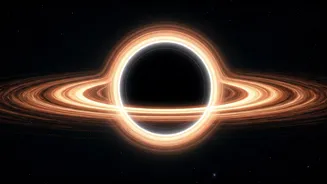
Observations made by the Euclid telescope have provided compelling evidence that collisions between galaxies can trigger the activation of supermassive black holes, which reside at the center of many galaxies. When galaxies collide, the intense gravitational interactions can cause gas and dust to be funneled toward the black hole. This accretion process can cause the black hole to become active, releasing enormous amounts of energy. The Euclid telescope is designed to map the large-scale structure of the universe, providing the data to understand the process. These insights are not only essential for understanding the lifecycle of galaxies but also shed light on the role of supermassive black holes in the evolution of galaxies. This research is improving our knowledge of how galaxies interact and evolve over cosmic timescales.
Star's Wobbling Orbit
Astronomers have successfully observed the wobbling orbit of a star, providing concrete confirmation of Einstein's theory of frame-dragging. Frame-dragging is a key prediction of Einstein's general theory of relativity, which suggests that massive rotating objects, like stars, can warp the fabric of spacetime, influencing the motion of objects around them. Observing this effect is crucial for validating Einstein's theory. Measuring the slight changes in the star's orbit is a delicate and challenging endeavor. The observed frame-dragging effect provides strong evidence for the accuracy of general relativity, and supports the idea of spacetime distortion caused by massive objects, and deepens our understanding of the universe's mechanics. The ability to detect this subtle effect highlights the precision of modern astronomical techniques.
Comet Formation Insight
Scientists are delving into the characteristics of ancient interstellar comet 3I/ATLAS, hoping to gather clues about the formation of early star systems. Interstellar comets, originating from beyond our solar system, provide a unique opportunity to study material from different regions of the galaxy. Analyzing the composition and structure of comet 3I/ATLAS can help in understanding the building blocks of planets and the conditions present during the early stages of star system formation. This research is instrumental in understanding how our solar system compares to other star systems, and how the universe was formed. Studying interstellar comets provides insights into the diverse processes involved in the formation of celestial bodies and the potential distribution of materials. This helps scientists to develop a more accurate picture of the universe's origins and evolution.
Planetary Composition Unveiled
Recent studies suggest that Uranus and Neptune may be dominated by rocks, revising earlier models of their composition. New data analysis and improved models have allowed scientists to reassess the internal structure of these ice giants, revealing that rock could play a more significant role in their formation than previously thought. This new perspective challenges existing theories about the formation of these planets, suggesting that rocky material may have played a bigger role in their early development. These findings offer important insights into how these planets formed. Understanding the composition and structure of Uranus and Neptune is vital for understanding the diversity of planets in our solar system and the processes that shaped them, giving better insight into the characteristics of ice giants in general.