






Diamond's New Frontier
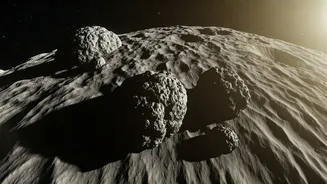
In a significant advancement in materials science, Chinese researchers have successfully engineered a novel form of diamond, dubbed 'hexagonal diamond.'
This crystalline structure exhibits extraordinary hardness, surpassing that of naturally occurring diamonds. This breakthrough holds immense potential for applications requiring extreme durability, such as advanced cutting tools, protective coatings, and high-performance industrial equipment. The precise synthesis process, while complex, opens doors to a new era of material engineering, challenging our previous understanding of diamond's fundamental properties and paving the way for next-generation materials with unprecedented strength and resilience. This discovery represents a leap forward in the quest for materials that can withstand the most demanding conditions.
Heart Muscle Revival
A remarkable stride has been made in cardiac medicine with the development of an experimental mRNA-like treatment. This innovative approach has demonstrated the ability to heal damaged heart muscle following a heart attack, as observed in successful trials on mice and pigs. The therapy works by delivering specific genetic instructions to promote tissue regeneration. This breakthrough offers a glimmer of hope for millions worldwide affected by heart disease, suggesting a future where recovery from cardiac events could be significantly enhanced. Further research is crucial to ascertain its efficacy and safety for human application, but the initial results are incredibly promising, hinting at a revolutionary new treatment paradigm for cardiovascular repair.
Return to the Moon
NASA's ambitious Artemis II mission is gaining momentum as its colossal rocket has been moved to the launch pad, marking a critical step towards its scheduled liftoff. This mission signifies humanity's determined effort to return to the lunar surface and establishes a stepping stone for future deep-space exploration, including potential missions to Mars. The rocket's transfer underscores the intensive preparation and engineering prowess involved in such a monumental undertaking. With the April deadline looming, this maneuver signifies a final push to meet critical timelines. The mission's success would not only be a testament to scientific and engineering achievement but also reignite global interest in space exploration and discovery.
Humanity's Unique Chin
The distinctive feature of a human chin, absent in other hominid species, has long puzzled scientists. While its exact evolutionary purpose remains a subject of ongoing debate, several theories attempt to explain its development. One prominent hypothesis suggests it played a role in facial structure changes associated with a diet shift towards softer foods, requiring less robust jaw muscles. Another theory posits that the chin may have served a social signaling function, perhaps related to sexual selection or indicating maturity. The development of the chin is intricately linked to changes in the human jawbone during facial prognathism reduction. Understanding this unique anatomical trait provides insight into the complex evolutionary journey of Homo sapiens and our distinct physical characteristics.