




Solar Maximum's Impact
The prediction for the best viewing of the Northern Lights in 2026 is linked with the solar cycle, which is a roughly 11-year cycle of activity on the Sun.
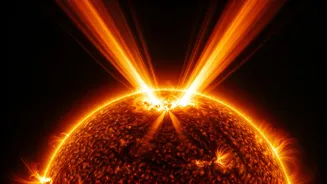
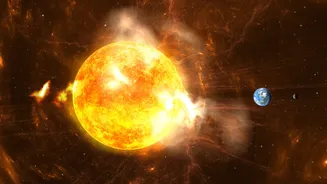
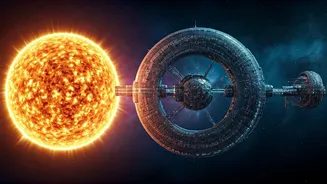
During this cycle, the Sun's activity goes through phases of increasing and decreasing, culminating in a period known as 'solar maximum.' During solar maximum, the Sun experiences more sunspots, solar flares, and coronal mass ejections (CMEs). These events release enormous amounts of energy and charged particles into space. When these particles interact with the Earth's magnetic field, they create the stunning auroral displays. In 2026, the Sun is expected to reach the peak of its current solar cycle. Scientists anticipate that these events will be more frequent and intense, creating more chances for widespread and impressive auroral displays, potentially visible to more people around the globe.
Solar Storms Explained
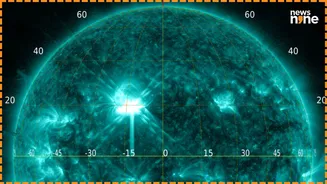
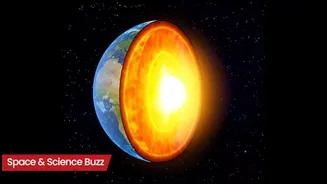
Solar storms, which cause the Northern Lights, are initiated by events on the Sun. These events include solar flares and coronal mass ejections (CMEs). Solar flares are sudden bursts of energy that release radiation across the electromagnetic spectrum, including radio waves, X-rays, and ultraviolet radiation. CMEs are gigantic expulsions of plasma and magnetic fields from the Sun's corona. When these bursts of energy reach Earth, they interact with the Earth's magnetosphere, which is the region around Earth controlled by its magnetic field. These interactions can cause geomagnetic storms, which are disturbances in Earth's magnetic field. Geomagnetic storms can cause the aurora borealis, but they can also disrupt satellite communications, GPS navigation systems, and power grids. The stronger the solar storm, the more intense and widespread the auroral displays and the greater the potential for technological disruptions.
Aurora Borealis Unveiled
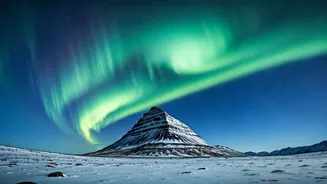
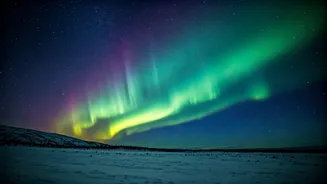
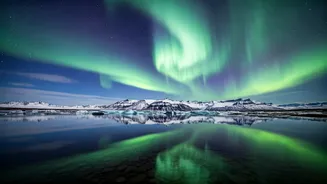
The beauty of the Northern Lights is a result of a complex interplay of solar activity and Earth's atmosphere. The charged particles from solar storms travel through space until they reach Earth. They are then drawn towards the Earth's magnetic poles. As these charged particles collide with atoms and molecules in the Earth's atmosphere, they excite these atoms to higher energy levels. When the atoms return to their normal energy levels, they release energy in the form of light. The color of the aurora depends on the type of gas atoms that are excited and the altitude at which the collisions occur. Oxygen produces green and red light, nitrogen creates blue and purple light, producing the array of colors that dance across the night sky. The aurora borealis are most frequently observed near the Arctic circle, but during periods of strong solar activity, they can be seen much further south.
Viewing Opportunities Ahead
The prediction that 2026 will be a prime year for aurora viewing provides enthusiasts with an exceptional opportunity. To increase the chances of seeing the Northern Lights, it is ideal to be away from light pollution. Dark locations, like rural areas or national parks, are best. Checking aurora forecasts can also improve the chances of seeing them. Websites and apps dedicated to space weather provide real-time updates and predictions about auroral activity. The higher the Kp index, which measures geomagnetic activity, the more likely it is that the aurora will be visible. Having patience and being prepared to wait is also crucial. The aurora borealis can be unpredictable, so the best way to see them is to be in the right place at the right time and be ready. Being aware of any potential disruptions caused by solar storms is also essential.