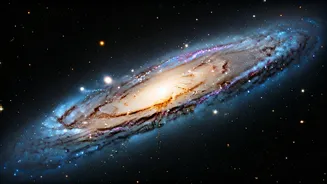







Galaxies in Sync
Astronomers have identified galaxies aligning and moving together across a distance of 50 million light-years. This intriguing phenomenon suggests a potential
interconnectedness within the cosmos, where gravitational forces and cosmic structures influence the behavior of galaxies over vast stretches of space. These findings challenge current models and encourage researchers to dig deep into the dynamics of galaxies and the environments they exist in. Understanding how galaxies interact is key to comprehending the evolution of the universe and its structure, and also offers insight into the overall distribution of matter in the cosmos. Scientists suggest that the synchronised movements of these galaxies might have implications for models concerning dark matter and other unseen entities that form the universe.
Exoplanet Formation Puzzles
Observations of a misaligned exoplanet are challenging established theories about how solar systems form. The alignment of planets is a key factor in comprehension of solar system architectures. This particular planet’s orbit, which doesn't conform to the usual patterns, is forcing astronomers to revisit and reassess their understandings of the processes that shape planetary systems. A better comprehension of these variations is critical in determining the diversity of planets and potential habitats for life beyond Earth. The challenges also prompt scientists to revise existing models and to explore new mechanisms that could account for planetary misalignment in other systems as well. The exoplanet's orbital behavior is a significant piece of evidence that will help unlock the complex formation of celestial systems.
Expanding Universe's Mystery
New telescope data is further deepening the puzzle of how fast the universe is expanding. The rate of expansion is a fundamental parameter in cosmology, and it helps determine the fate of the universe. The new data, which has expanded on the current observations, offers further insights into this critical value. Discrepancies between different measurement techniques have forced scientists to re-examine the methods and assumptions they use to calculate this expansion rate. The enigma surrounding the expansion rate has led to intense investigation, with efforts from various researchers and research institutions, to refine the calculations and resolve the discrepancies. The accuracy of the expansion rate is essential for building a detailed cosmic timeline and for comprehending the universe's ultimate destiny. This puzzle encourages more scientific inquiry and research in the field.