







Hemp's Hidden Potential
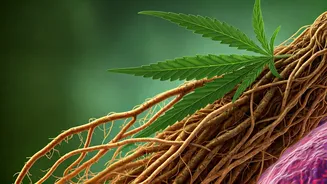
For years, hemp was primarily known for its fibers and seeds, yet the focus is broadening to include its roots. These roots, often discarded, are now attracting
considerable attention due to their unique properties and potential applications. The shift in perspective stems from an increased understanding of hemp's complex chemical composition and its interaction with the environment. Researchers are now actively studying the compounds within hemp roots, seeking to harness their benefits. This renewed interest not only offers innovative solutions for agricultural practices but also brings hope for advancements in cancer research, opening up new prospects for both farmers and scientists to explore.
Agricultural Benefits Unveiled
Hemp roots are proving to be advantageous in sustainable agricultural practices. They contribute to soil health by improving its structure and preventing erosion. Their deep root systems help to aerate the soil, enhancing nutrient availability for subsequent crops. Hemp roots have also been identified as having phytoremediation capabilities, meaning they can absorb and neutralize heavy metals from contaminated soil, making them a useful tool for land reclamation. Moreover, hemp cultivation can provide a diverse crop rotation strategy, which contributes to reducing the incidence of pests and diseases. Farmers who integrate hemp into their crop cycles can potentially experience increased soil fertility, better environmental sustainability, and improved overall farm productivity. The versatility of hemp roots is opening doors for a more sustainable approach to agriculture.
Cancer Research Breakthroughs
Beyond agriculture, hemp roots are gaining attention for their potential anti-cancer properties. Initial studies have shown that compounds extracted from hemp roots, like certain cannabinoids and other bioactive substances, may possess anti-tumor effects. Researchers are exploring how these compounds can inhibit cancer cell growth, prevent metastasis, and enhance the efficacy of traditional cancer treatments. The preliminary results are encouraging and warrant further investigation. Several studies are focusing on isolating and identifying specific compounds responsible for these effects, as well as on understanding their mechanisms of action. If proven effective, hemp root extracts could provide new therapies with fewer side effects than current cancer treatments. This research could revolutionize cancer treatment and offer new hope for individuals affected by this devastating disease.
Future Research Directions
The exploration of hemp roots is still in its early stages. Future research will need to focus on several crucial areas to unlock the full potential of these plant components. Scientists plan to conduct larger-scale clinical trials to confirm the efficacy of hemp root extracts in treating cancer and other diseases. They must also develop standardized extraction methods to ensure consistent compound concentrations. Research on optimizing cultivation practices to maximize the production of beneficial compounds within the roots will be vital. Collaboration between farmers, researchers, and pharmaceutical companies will be essential to translate the scientific findings into practical applications. These collaborations can speed up the development of hemp-based products for medical treatments and agricultural innovations. Continued research will provide a clearer understanding of hemp roots and their potential benefits.
Economic and Social Impact
The growing interest in hemp roots has significant economic and social implications. For farmers, it presents an opportunity to diversify their crop offerings and create new revenue streams. Growing hemp for root production could transform rural economies, offering employment opportunities and boosting local markets. The development of hemp-based cancer treatments could also create new industries and jobs in the healthcare sector. Furthermore, as the understanding of hemp roots expands, it has the potential to alter societal perceptions of cannabis and its associated plants. With increasing awareness, the stigma surrounding hemp could decrease, leading to broader acceptance and more research funding. The ripple effect of these developments could impact the agricultural, medical, and social landscapes positively.