






The Ubiquitous Potato
It's nearly impossible to imagine Indian kitchens without the humble potato. From the crispy exterior of samosas and parathas to the heart of diverse curries
and street food chaats, this versatile tuber seems intrinsically Indian. However, its origins lie far from the subcontinent, originating in the Andes Mountains of South America. Cultivated by the Incas centuries ago, the potato eventually made its way across oceans, finding a perfect home in India. Its incredible ability to absorb spices and masalas, coupled with its affordability and filling nature, made it a culinary chameleon, seamlessly blending into countless Indian preparations and becoming an indispensable ingredient.
Tomato's American Roots
The vibrant red hue and tangy essence of tomatoes are fundamental to so many Indian dishes, yet this essential ingredient also hails from the Americas. Originating in the Andes region and later cultivated in Mexico, tomatoes were introduced to Europe in the 16th century by Spanish explorers. Their journey continued eastward, eventually enriching Indian cuisine. Tomatoes became a crucial component for balancing flavors, adding a delightful sourness and depth to gravies, chutneys, and sauces. Beyond their culinary significance, tomatoes are a powerhouse of antioxidants like Lycopene, contributing to their distinctive color and offering health benefits, including support for heart health and protection against environmental damage.
Chilli Pepper's Fiery Arrival
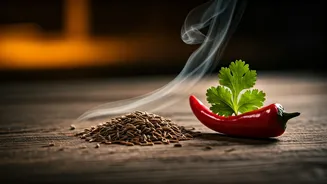
The intense heat often associated with Indian food is largely thanks to the chilli pepper, a spice that, contrary to popular belief, isn't native to India. Chilli peppers are indigenous to the Americas, with evidence suggesting domestication in Mexico and other regions of Central and South America. Introduced to Europe in the late 15th century, they rapidly disseminated across continents, including Asia. While India didn't invent the chilli, its people embraced and mastered its use with unparalleled skill. Indian culinary traditions transformed the chilli into a cornerstone of flavor, making it feel as though it has been an intrinsic part of the country's gastronomic identity for millennia.
Cauliflower's Western Origin
Cauliflower dons an especially convincing Indian guise, frequently appearing in popular dishes like aloo gobi, various kormas, and stir-fries. Its presence in Indian meals is so routine that its foreign origins often go unnoticed. However, this cruciferous vegetable actually traces its lineage back to Western Asia, where it was known and consumed by ancient civilizations like the Persians, Greeks, and Romans. Over extensive periods, cauliflower traveled and adapted, eventually becoming a staple in Indian households. While its current role in Indian cooking is undeniable and deeply ingrained, its identity as an Indian vegetable is a more recent chapter in its long global journey.
Samosa's Middle Eastern Ancestry
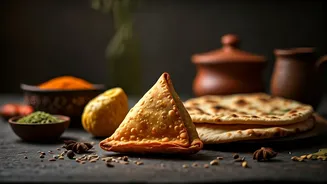
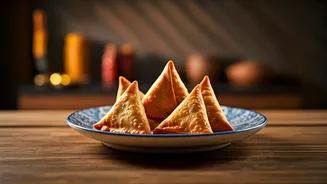
The beloved samosa, a quintessential Indian snack, boasts a history that begins far beyond the subcontinent's borders. Historical evidence suggests a precursor to the modern samosa existed in the Middle East and Central Asia during medieval times, where similar filled pastries were known by names like 'sanbusak.' These early versions journeyed into India through royal courts and trade networks. It was in India that the pastry was masterfully transformed into the crisp, triangular delight filled with spiced potatoes and peas that is now synonymous with tea time and street food culture. India didn't just adopt the samosa; it ingeniously reinvented it.
Naan's Persian Nomenclature
The soft, often buttery flatbread known as naan is a ubiquitous presence in Indian restaurants worldwide. Yet, its very name carries a Persian origin. Sources indicate that 'naan' derives from Persian terms related to bread, such as 'nân-e sangak,' and historical records place its presence in India as early as the 14th century. This bread likely arrived along ancient cultural and culinary pathways connecting Persia, Central Asia, and the Indian subcontinent. As culinary exchanges flourished, wheat-based breads baked in hot ovens gradually adapted to local palates, becoming a significant part of North Indian dining, particularly favored by Mughal nobility before its widespread adoption.
Jalebi's Western Trail
Jalebi, with its distinctive spiral shape and syrupy sweetness, feels intrinsically Indian, a staple of festivals and sweet shops. However, its culinary path leads westward. Historical texts reference similar confections in Arabic and Persian culinary traditions under names like 'zalabiya' and 'zolbiya.' These sweets eventually migrated through the Middle East before finding their way to India. Upon arrival, the Indian rendition of jalebi was amplified, becoming brighter, crispier, and more visually dramatic, culminating in the iconic orange coils that are now a hallmark of Indian bazaars and celebrations. While the concept traveled, India undoubtedly perfected its final, unforgettable form.