




Echoes of Project Natick
SpaceX's recently announced endeavor to deploy up to a million data-center satellites into orbit to circumvent terrestrial power and water limitations
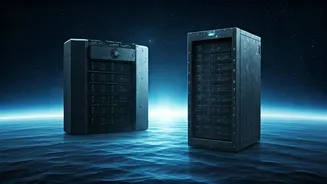
echoes Microsoft's earlier foray into subsea data centers with "Project Natick" in 2015. Microsoft's initiative aimed to leverage natural cooling from seawater and tap into renewable offshore energy sources, a concept initially lauded for its potential to overcome land-based computing constraints. However, despite meeting its technical objectives, Project Natick was ultimately shelved due to insufficient client interest and unfavorable economic conditions. This historical precedent serves as a significant cautionary tale for SpaceX, highlighting that geographical differences notwithstanding, certain fundamental challenges persist when considering data infrastructure outside conventional environments. The core issue revolves around the inherent inflexibility of sealed, non-upgradable systems, a design choice that becomes increasingly problematic with the rapid evolution of critical technologies like artificial intelligence.
The Adaptability Dilemma
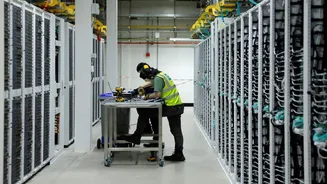
A primary concern for both SpaceX's orbital data centers and Microsoft's defunct undersea project lies in their sealed, "locked-for-life" design. This inherent lack of flexibility poses a significant problem, especially in the context of artificial intelligence, where AI chips are experiencing yearly advancements in performance and capability. Unlike traditional land-based data centers that can be regularly upgraded and maintained, these sealed units, whether submerged or in orbit, are envisioned for deployment and then left largely untouched for extended periods, estimated at five to seven years. This static nature contrasts sharply with the dynamic pace of AI development, creating a potential obsolescence issue where the hardware might be outdated long before its intended service life concludes. Specialists note that this inflexibility is likely to be exacerbated in space, presenting even more severe challenges than those faced underwater.
Economic and Environmental Strains
The economic viability of both underwater and orbital data centers faces substantial headwinds. For Microsoft, deploying data centers beneath the sea proved more expensive than building on land, a cost differential that would have required tens of billions of dollars in investment to achieve economies of scale. SpaceX's ambitions in orbit amplify this cost challenge exponentially. Estimates suggest that Musk's plan for a million AI satellites could run into the trillions of dollars. For orbital data centers to become commercially feasible, launch costs per kilogram would need to plummet from current thousands to mere hundreds of dollars. Furthermore, the harsh conditions of space, including radiation, extreme temperature fluctuations, and the sheer difficulty of heat management in a vacuum, introduce complex engineering problems that demand robust, and therefore expensive, solutions. While Musk aims to mitigate these issues through reduced launch expenses and more resilient chips, experts caution that solving Earth's problems, such as power and environmental concerns, might be more practical than migrating them to space.
SpaceX's Starship Gamble
Central to SpaceX's ambitious orbital data center plan is the success of its Starship rocket. This next-generation vehicle is designed for full reusability and to carry significantly larger payloads than its predecessors, Falcon rockets, which is crucial for launching the sheer number of satellites required. However, Starship is currently behind schedule and has experienced several explosive setbacks during its suborbital test flights since 2023. Achieving Musk's goal of deploying a million AI satellites would necessitate an estimated 3,000 Starship launches annually, averaging eight per day. This reliance on an unproven, albeit potentially revolutionary, launch system introduces a significant layer of risk to the entire venture. Even competitors like Blue Origin are exploring orbital data center concepts with their "Project Sunrise," highlighting a broader industry interest but also underscoring the immense logistical and engineering challenges involved.
Complementary Role in Orbit
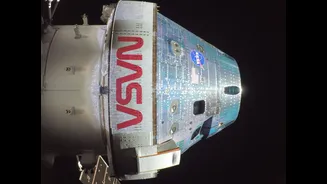
While the prospect of massive orbital data centers garners attention, many experts believe their future lies not in replacing terrestrial facilities but in complementing them, serving niche functions within the space ecosystem. Claude Rousseau, a research director, strongly asserts that space-based data centers will not supplant ground-based ones in the foreseeable future. Instead, they are more likely to cater to specific orbital infrastructure needs, such as supporting military satellite constellations and space stations. The International Space Station, for instance, already hosts experimental systems for on-orbit data processing to reduce reliance on limited downlink bandwidth. This perspective suggests that orbital data centers will evolve as a specialized service for the growing demands of space operations, rather than a wholesale migration of global computing capacity.