






Brain's Building Blocks
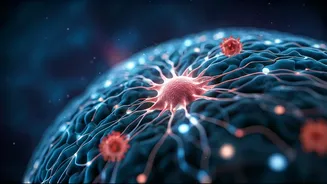
The human brain, a marvel of biological engineering, is composed of billions of specialized cells called neurons. These neurons are the fundamental units
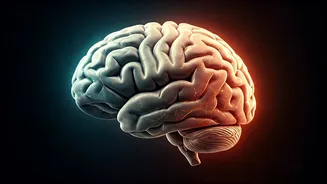
responsible for transmitting information throughout the central nervous system. Each neuron possesses a cell body, dendrites that receive signals from other neurons, and an axon that transmits signals to other neurons. Communication between neurons occurs at junctions called synapses, where chemical messengers known as neurotransmitters are released. This intricate network of interconnected neurons forms the basis of all thought, emotion, and action. The brain's structure is highly organized, with distinct regions specializing in different functions, such as the cerebrum, responsible for higher-level thinking, and the cerebellum, which governs motor control and coordination. Understanding these basic components is crucial to appreciating the brain's immense capabilities.
Memory Formation Explained
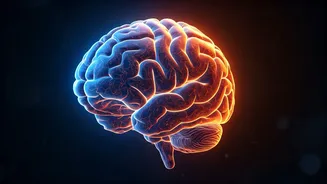
The process by which our brains encode, store, and retrieve information, known as memory formation, is a complex and dynamic phenomenon. It typically involves several stages, starting with sensory input that is briefly held in sensory memory. If this information is deemed important, it is then transferred to short-term memory, which has a limited capacity and duration. Through processes like rehearsal and elaboration, information can be consolidated into long-term memory, where it can be stored for extended periods. Neuroscientists believe that long-term memory formation involves physical and chemical changes in the brain, including the strengthening of synaptic connections between neurons. Different types of long-term memory exist, such as declarative memory for facts and events, and non-declarative memory for skills and habits. Research continues to unravel the precise mechanisms underlying memory, shedding light on conditions like amnesia and the impact of aging on cognitive function.
Cognition and Behavior
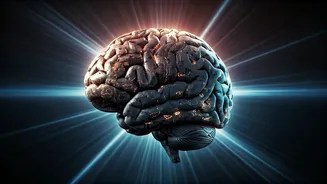
Cognition encompasses all the mental processes involved in gaining knowledge and comprehension, including thinking, knowing, remembering, judging, and problem-solving. These cognitive functions are intricately linked to our behavior, shaping how we perceive the world and interact with it. For instance, our ability to make decisions is influenced by how we process information and evaluate potential outcomes, drawing upon past experiences stored in memory. Attention allows us to focus on relevant stimuli while filtering out distractions, a crucial aspect of learning and task performance. Language, another core cognitive ability, enables communication and complex social interaction. Neuroimaging techniques have allowed scientists to observe brain activity during various cognitive tasks, revealing specific neural pathways and regions involved. Understanding the interplay between cognition and behavior is fundamental to fields like psychology, education, and artificial intelligence.