



Rethinking Coastal Habitats
In Sandown, a seaside town grappling with the legacy of abandoned hotels, a wave of new initiatives is underway to foster scientific curiosity and community
engagement. Council member Ian Boyd, through his non-profit The Common Space, is at the forefront of these efforts. His work, in collaboration with colleague Nigel George's Artecology brand, involves developing artificial rock pools. These ingenious structures, attached to coastal defenses, are designed to attract a more diverse array of marine life to areas typically devoid of it. Early findings suggest these man-made habitats can successfully support species that prefer the nooks and crannies, potentially enhancing the local biodiversity and offering unique research opportunities for visiting university students. This approach leverages Sandown's unique position within a UNESCO Biosphere Reserve, aiming to attract educational tourism and specialized interest holidays.
Elk and Rewilding Vision
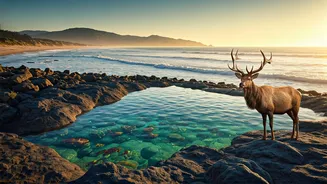
Lawrence Bates, CEO of Wildheart Animal Sanctuary, is spearheading an ambitious project to transform Sandown into a hub for environmental studies. His vision includes an International School of Rewilding, offering courses in regenerative farming, marine biology, and palaeontology. This proposed campus, spanning 140 hectares, aims to revitalize the town by creating exciting opportunities for young people and researchers. A key element of this plan involves introducing European elk to an open area, utilizing their natural behaviors of browsing and trampling to restore delicate wetland ecosystems. Bates believes this rewilding approach, which emphasizes minimal human intervention and allows nature to lead the restoration process, is crucial for combating the town's current stagnation. The campus would also feature a marine laboratory and lecture halls, providing a comprehensive environment for study and innovation. This initiative is designed to tackle the 'brain drain' of young talent leaving the island by providing local career pathways in environmental sciences.
Capitalizing on Island Assets
The Isle of Wight's designation as a UNESCO Biosphere Reserve in 2019 highlights its rich ecological and cultural diversity, positioning it as a prime location for conservation and sustainable development research. Recognized as a significant coastal wildlife site in the UK and a key area for dinosaur discoveries in Europe, the island possesses considerable natural and scientific capital. Ian Boyd emphasizes the need to actively leverage these accolades. He points out that while Sandown lacks a university, its proximity to major cities allows for collaborative investment opportunities. The potential for educational tourism, including short courses and specialized interest holidays, is immense. By fostering these academic and research connections, Sandown can begin to attract the investment and interest needed for its regeneration. The goal is to demonstrate the island's potential, using successful projects as evidence to draw further attention and resources.