






The Brain's Pain Decider
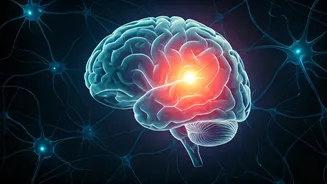
Scientists have identified a small, previously overlooked region in the brain, known as the caudal granular insular cortex (CGIC), which appears to act
as a crucial switch determining whether pain sensations fade away after an injury or persist indefinitely, leading to chronic pain. Research conducted at the University of Colorado Boulder, utilizing animal models, demonstrated that deactivating this specific neural pathway effectively prevented the development of chronic pain. Furthermore, in instances where chronic pain was already established, its interruption led to the resolution of the condition. Senior author Linda Watkins emphasized that this circuit is vital in signaling the spinal cord to maintain the pain response; its suppression halts chronic pain, while its continuous activity perpetuates it. This breakthrough is occurring amidst rapid advancements in neuroscience, allowing for more precise manipulation of brain cells, which is accelerating the search for novel, non-opioid treatment targets.
When Touch Hurts
Chronic pain is a pervasive issue, affecting approximately one in four adults, with nearly ten percent experiencing disruptions to their daily lives. Often, the persistent discomfort isn't due to the original injury but rather a maladaptive response within the nervous system itself. A prime example is allodynia, where even the gentlest touch triggers pain because the brain and spinal cord begin to misinterpret normal sensory signals as threats. Typically, acute pain serves as a protective mechanism; for instance, a stubbed toe sends a signal to the brain prompting a response, which ceases once healing occurs. Chronic pain, however, deviates from this pattern, with the pain signals continuing unabated long after tissue repair, akin to a perpetually activated alarm system. The exact reasons and mechanisms behind this failure of pain resolution remain a significant area of ongoing scientific inquiry.
Disabling Chronic Pain
Previous investigations from the same research team had hinted at the involvement of the CGIC, a small cluster of cells within the insula, in conditions like allodynia. Human studies have also indicated heightened activity in this region among individuals suffering from chronic pain. Historically, researchers could only study this area by surgically removing it, a method impractical for therapeutic applications. The recent study employed cutting-edge techniques, using fluorescent proteins to map the neural activity following sciatic nerve injury in rats. Advanced chemogenetic tools were then utilized to precisely control specific neurons. The findings revealed that while the CGIC plays a minimal role in immediate pain perception, it is indispensable for sustaining pain over extended periods. This pathway communicates with the somatosensory cortex, the brain's primary pain processing hub, which subsequently instructs the spinal cord to perpetuate pain signaling, thus causing normally innocuous sensations like touch to be perceived as painful.
Future Treatment Avenues
When researchers deactivated this specific CGIC pathway shortly after an injury in their study, the animals experienced only transient pain. Crucially, for animals already exhibiting chronic allodynia, interrupting this circuit led to the cessation of their pain. This research provides compelling evidence that specific brain pathways can be directly targeted to modulate sensory pain perception. Although the precise trigger for the CGIC to initiate long-term pain signaling is still unknown, and further research is necessary before clinical applications in humans are feasible, the potential for new treatments is immense. Lead author Jayson Ball envisions future therapies involving precise injections or infusions targeting specific brain cells, thereby circumventing the inherent risks of side effects and addiction associated with opioid medications. Brain-machine interfaces, whether implanted or external, are also proposed as viable options for managing severe chronic pain, with numerous companies actively developing these technologies. The availability of tools that allow for manipulation of specific neural cell populations, rather than just broad brain regions, is significantly accelerating the pursuit of innovative chronic pain solutions.