



Forging a Lunar Foothold
NASA's updated lunar strategy centers on building a permanent human presence, evolving from the Artemis program's foundational missions. This plan emphasizes
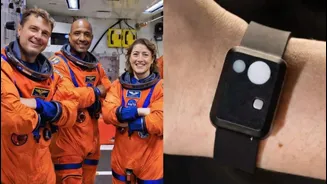
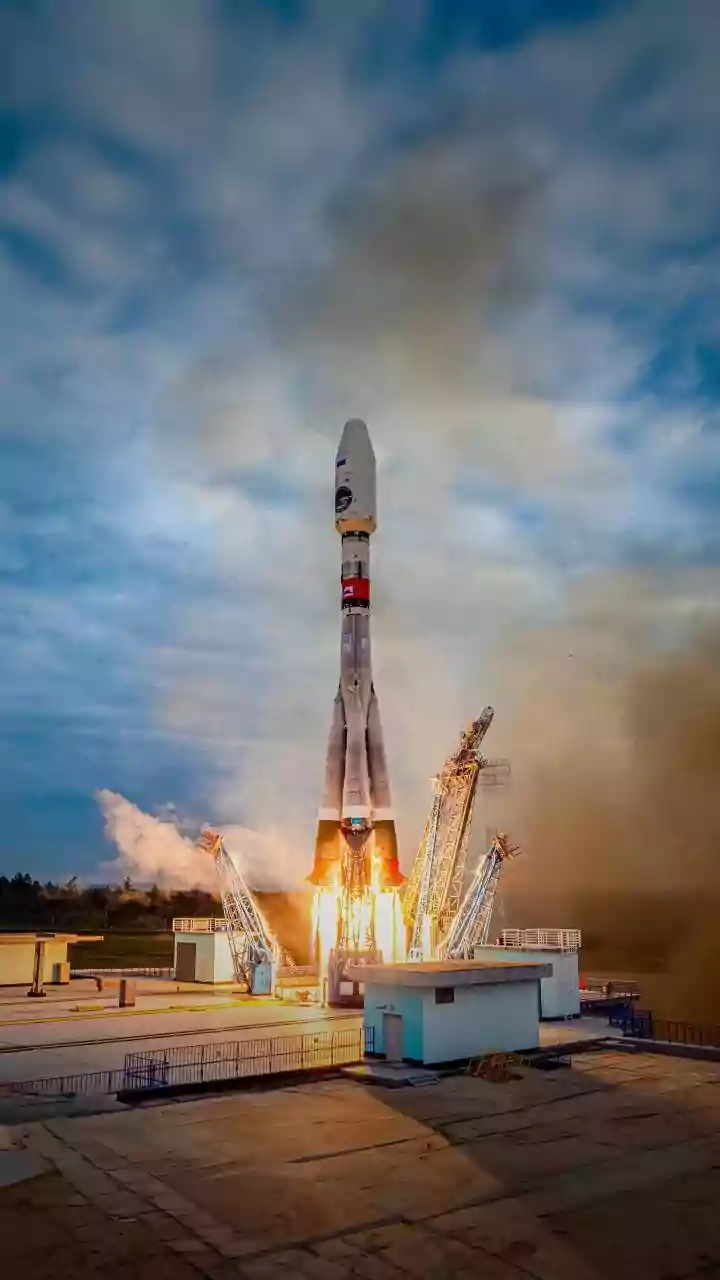
a phased architectural approach, incrementally developing capabilities with each landing and in close collaboration with industrial and international partners. The agency is standardizing the Space Launch System rocket and has added a 2027 mission, targeting at least one lunar surface landing annually thereafter. Artemis III, slated for 2027, will serve as a crucial test of integrated systems and operational readiness in Earth orbit before the subsequent Artemis IV lunar landing. Post-Artemis V, NASA intends to integrate more commercially sourced and reusable hardware to facilitate more frequent and cost-effective crewed lunar missions, aiming initially for landings every six months, with the potential to increase this cadence as technologies mature.
Phased Lunar Base Development
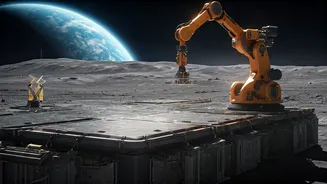
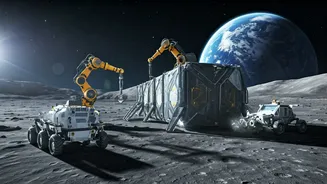
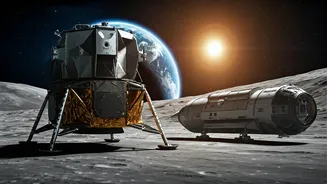
The development of a Moon base will unfold in three distinct phases, aiming to establish a lasting human foothold. Phase one, 'Build, Test, Learn,' will leverage Commercial Lunar Payload Services (CLPS) deliveries and the Lunar Terrain Vehicle program to expand lunar activities. This will involve rovers, instruments, and technology demonstrations focused on mobility, power generation, communications, navigation, surface operations, and scientific research. The second phase, 'Establish Early Infrastructure,' will introduce semi-habitable modules and regular logistical support to enable recurring astronaut missions. This phase will incorporate significant contributions from international partners, such as JAXA's pressurized rover. The final phase, 'Enable Long-Duration Human Presence,' will utilize cargo-capable human landing systems to deliver more substantial infrastructure, including ASI's Multi-purpose Habitats and CSA's Lunar Utility Vehicle, creating a continuous human presence on the Moon.
Accelerated Lunar Science
The expansion of lunar infrastructure will concurrently open up novel avenues for scientific discovery. With an expedited CLPS cadence projecting up to 30 robotic landings starting in 2027, NASA aims to hasten the delivery of scientific and technological payloads to the lunar surface. These missions are designed to accommodate various robotic explorers, including rovers, hoppers, and drones, with active invitations extended to industry, academia, and global collaborators. Prominent near-term payloads include the VIPER rover and the LuSEE-Night mission. A Request for Information (RFI) released on March 24 seeks payloads aligned with NASA's scientific and technological objectives for additional flights in 2027 and 2028, while also creating valuable opportunities for students and researchers nationwide to contribute to lunar instrument development. This same RFI will also solicit payloads for future Mars missions, encompassing the Mars Telecom Network and a nuclear technology demonstration mission.
Low Earth Orbit Transition
Beyond lunar ambitions, NASA is solidifying its commitment to low Earth orbit (LEO) while strategically planning for the eventual retirement of the International Space Station (ISS). Recognizing the ISS's unparalleled contribution to scientific advancement, supporting over 4,000 research investigations and thousands of researchers, the agency acknowledges its finite operational lifespan. Therefore, the transition to commercial space stations must be carefully orchestrated to foster long-term industry sustainability. To facilitate this shift, NASA is introducing a refined LEO strategy that preserves existing pathways while implementing a structured, ISS-centric approach. This concept involves procuring a government-owned Core Module to connect with the ISS, followed by commercial modules that will be tested using ISS capabilities before transitioning to independent operation. As technical and operational proficiencies advance and market demand solidifies, these stations will operate autonomously, with NASA becoming one of many commercial service customers. The agency will also broaden industry engagement through private astronaut missions, commander seat sales, joint ventures, multi-module competitions, and prize-based incentives.
Nuclear Propulsion to Mars
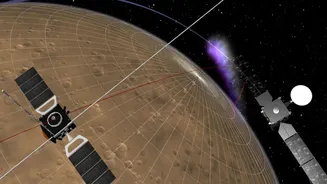
In a significant announcement, NASA revealed plans to launch Space Reactor-1 Freedom (SR-1 Freedom) before the end of 2028. This mission will feature the first nuclear-powered interplanetary spacecraft and aims to demonstrate advanced nuclear electric propulsion in deep space. Nuclear electric propulsion is highly valued for its efficient mass transport capabilities in deep space and its potential to support high-power missions beyond Jupiter's orbit, where solar arrays are less effective. Upon arrival at Mars, SR-1 Freedom will deploy the Skyfall payload, comprising Ingenuity-class helicopters, to continue planetary exploration. This mission is critical for establishing flight heritage for nuclear hardware, setting regulatory and launch precedents, and stimulating the industrial base for future fission power systems applicable to propulsion, surface operations, and extended missions.