
Solar Maximum Explained
The spectacular aurora displays anticipated in 2026 are primarily due to increased solar activity. The sun operates on an approximately 11-year cycle,
shifting between periods of heightened and diminished activity. The peak of this cycle is known as the solar maximum, a time when the sun exhibits a higher number of sunspots, solar flares, and coronal mass ejections (CMEs). These events release enormous amounts of energy and charged particles into space. When these particles interact with the Earth's magnetic field, they cause geomagnetic storms. These storms, in turn, are responsible for the beautiful aurora borealis, more commonly known as the Northern Lights.
Geomagnetic Storms Surge
In 2026, experts anticipate that the strength and frequency of geomagnetic storms will increase. The post-solar maximum period can be particularly active. During this time, the sun is still highly active but its magnetic field is undergoing changes, which can lead to more complex and intense solar events. The increase in solar flares and CMEs during this period means more charged particles will be hurled towards Earth. As these particles interact with the Earth's magnetosphere, they cause geomagnetic disturbances. These disturbances are what trigger the vibrant displays of the aurora. The stronger the storm, the further south the aurora can be seen, which means 2026 could potentially offer breathtaking views to a wider audience than usual.
Impact on Auroras
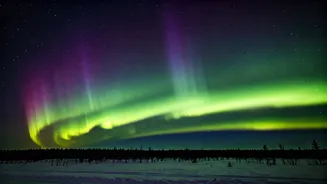
The increase in geomagnetic storms will have a direct and dramatic effect on the auroras. The intensity and visibility of the Northern Lights are directly linked to the strength of the geomagnetic activity. During periods of higher activity, the aurora displays are more frequent, brighter, and can be seen from lower latitudes. The charged particles from the sun, when they collide with the gases in the Earth's atmosphere, cause these gases to release light. The colors visible in the aurora depend on the type of gas being excited and the altitude at which the collision occurs. Oxygen produces green and red lights, while nitrogen creates blue and purple hues. With more frequent and stronger geomagnetic storms expected in 2026, there is anticipation for a visual treat of colorful and expansive aurora displays.
Viewing Opportunities
With a surge in solar activity and stronger geomagnetic storms anticipated in 2026, there will be heightened opportunities for viewing the Northern Lights. Locations closer to the Arctic Circle will offer the best chances of viewing, as the aurora is most frequent in these regions. However, with the increased storm intensity, the aurora could be visible further south than usual. This means that viewers in parts of Canada, the northern United States, and even parts of Europe may have chances to witness the phenomenon. The peak viewing times will typically be during the late evening and early morning hours, particularly during periods of clear skies and minimal light pollution. Planning trips around the new moon phase, when the sky is darkest, will further enhance viewing opportunities.
Preparing for Viewing
To maximize the chances of witnessing the Northern Lights in 2026, careful planning is essential. Staying updated on space weather forecasts is crucial. Various agencies provide geomagnetic storm predictions and real-time aurora alerts, allowing potential viewers to plan viewing trips accordingly. The use of a camera to capture the auroras is highly recommended. Because the human eye is not always sensitive enough to see the full spectrum of colors, a camera will offer a richer image of the aurora display. The use of a tripod is also essential. For those traveling to remote locations, packing warm clothing is crucial, as temperatures can drop drastically. Checking the local weather forecast for cloud cover and light pollution will also enhance viewing experiences, ensuring the best opportunities for seeing the spectacle.