









Supermoon Defined
Supermoons occur when a full moon coincides with the moon's closest approach to Earth in its orbit, known as the perigee. Because the moon's orbit is not
perfectly circular, its distance from Earth varies throughout the month. When a full moon occurs near perigee, it appears larger and brighter than a typical full moon, thus becoming a supermoon. This effect is noticeable to the naked eye, offering a more spectacular view of the lunar surface and its brightness. The term 'supermoon' is not a scientific term but is widely used to describe these visually impressive full moons, drawing attention to their enhanced size and luminance. It is an opportunity for skywatchers to enjoy a more vibrant and detailed view of the lunar landscape, offering a unique astronomical experience.
January's Celestial Show
The Wolf Moon, a traditional name for the full moon in January, will be a supermoon in 2026. This adds significance to the event, making it more visually compelling. The specific timing of the supermoon's appearance enhances its visibility. Full moons, by definition, rise in the east around sunset and set in the west around sunrise. However, a supermoon, due to its increased brightness, often appears more prominent and can influence the atmosphere around it. This enhanced luminosity is particularly noticeable in January, when the crisp, clear air often results in ideal viewing conditions. This spectacle provides an excellent chance for both casual observers and dedicated astronomers to appreciate the wonders of the night sky, and it offers opportunities for photography and astronomical observation.
Jupiter's Close Dance
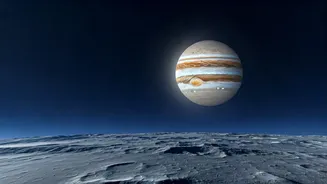
Adding to the visual appeal, the January 2026 supermoon will appear close to the planet Jupiter. The proximity of Jupiter, a bright celestial body, will further enrich the sky's visual tableau. As Jupiter is one of the brightest objects in the night sky, its presence near the supermoon will create an even more dramatic scene. The conjunction of the supermoon with Jupiter will be a remarkable sight, offering stunning photographic opportunities and captivating views for observers. The positions of these celestial bodies can be predicted with considerable accuracy. This will allow skywatchers to prepare for the best viewing times and locations. This offers a chance to observe the dynamics of our solar system and the celestial movements that influence how we perceive the universe.
Viewing and Observing
For those interested in observing the supermoon and Jupiter, the ideal viewing conditions are crucial. Choosing a location with minimal light pollution is recommended for the best experience. Viewing the event from a location away from city lights, with an unobstructed view of the horizon, will maximize the visual impact. The specific time of the supermoon's peak brightness is also important for planning. Knowing when the moon will be at its fullest, during its perigee, is essential. Binoculars or a telescope can further enhance the viewing experience. These tools provide closer views of the lunar surface and Jupiter, revealing details that are invisible to the naked eye. The supermoon offers an easily accessible astronomical event, allowing both novices and experienced stargazers to observe the wonders of the cosmos.
Significance and Impact
Events like the supermoon provide a significant opportunity to engage the public with astronomy. It sparks curiosity about space and the universe. The visually striking display of a supermoon, especially when combined with a bright planet like Jupiter, generates interest. Supermoons serve as a perfect introduction to astronomical concepts, such as lunar phases, orbits, and planetary movements. The event provides a chance for educators and amateur astronomers to share their knowledge and passion with others. The media attention that accompanies these events also helps promote scientific literacy and an appreciation for the natural world. This can lead to increased interest in STEM fields. These events help to inspire a sense of wonder and connection to the vastness of space.