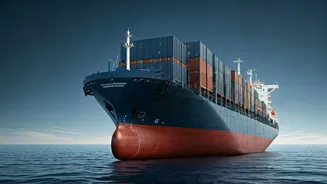








Early Concepts & Challenges
Historically, shipbuilding has always grappled with the inherent vulnerability of vessels to sinking. The Titanic disaster served as a stark reminder of these
limitations. Early approaches to making ships safer included watertight compartments and improved hull designs. These were significant steps, yet they didn't entirely eliminate the risk. The primary challenges have been the vast scale of ships, the complexity of structural integrity, and the unpredictable nature of disasters at sea. Understanding buoyancy and hydrodynamics was critical, but early theories and practices were often rudimentary, leaving much room for improvement.
Hull Design Evolution
The evolution of hull design has been fundamental to increasing ship safety. Early ships had relatively simple hulls, vulnerable to flooding if breached. Modern vessels benefit from advanced double-hull construction, creating a barrier against punctures and increasing overall buoyancy. Materials science plays a vital role: using stronger, lighter materials like advanced alloys and composites dramatically increases hull strength and reduces the weight of the ship. Sophisticated computer modeling helps engineers assess hull stress and potential failure points, enabling the development of shapes and structures that can withstand extreme pressures. These design enhancements are not only making ships more resistant to sinking but also improving their fuel efficiency.
Ballast System Improvements
Ballast systems are another vital aspect of unsinkability. Traditionally, ships used water ballast to improve stability by lowering the center of gravity and compensating for changing cargo weights. However, conventional ballast systems can be slow to adjust and susceptible to damage. Modern advancements include automated ballast control systems, which use sensors and computers to rapidly adjust ballast water levels in response to changing conditions. These systems can also actively compensate for damage, quickly flooding compartments to counteract leaks or shifts in weight caused by damage. This rapid response capability is a game-changer for enhancing a ship's ability to stay afloat after a breach.
Damage Control Technologies
Damage control systems are integral to the unsinkable ship concept. Modern ships now incorporate advanced damage control measures, including automated fire suppression systems and remote-controlled closing mechanisms for watertight doors and hatches. The use of specialized materials that can quickly seal hull breaches is another important innovation. Furthermore, the development of real-time monitoring systems allows crew members to quickly assess damage, identify the location and extent of flooding, and take appropriate action. These technologies, coupled with well-trained crew members, significantly boost the chances of survival after a crisis and are crucial for the resilience of the ship.
Digital Modeling & Simulation
Digital modeling and simulation have revolutionized ship design. Using complex software, engineers can create detailed virtual models of ships and simulate how they will react to various conditions, including storms, collisions, and hull breaches. This allows designers to test different structural designs, optimize ballast system performance, and assess the effectiveness of damage control systems before building a physical prototype. Such simulations also help in training crew members to handle a variety of emergency situations. By running numerous simulations, designers can evaluate different scenarios and improve the resilience and stability of the ship in realistic conditions.
Impact on Safety & Efficiency
The advancements in unsinkable ship technology have profound implications for maritime safety and operational efficiency. Ships designed with enhanced buoyancy, advanced damage control, and automated systems are less likely to sink in the event of an accident, thus significantly reducing the risk of loss of life and environmental disasters. The improvements in fuel efficiency brought about by optimized hull designs and better ballast systems will also lead to reduced operational costs and lower greenhouse gas emissions. The evolution also enables ships to handle more effectively, improving the flow of cargo, and making the sea a safer and more dependable medium for transportation.