





The Range Anxiety Fallacy
A pervasive concern among potential electric vehicle (EV) buyers is the fear of 'range anxiety,' the belief that an EV's battery will rapidly degrade,
significantly reducing its driving range over time. This notion suggests that soon after purchase, an EV transforms from a capable commuter into a vehicle limited to short, local trips. However, recent comprehensive analysis challenges this long-held assumption. By examining an astounding dataset encompassing over a billion miles of actual driving, researchers have uncovered compelling evidence that paints a much more optimistic picture of EV battery performance and longevity in everyday use.
Remarkable Battery Longevity
Contrary to popular apprehension, the real-world data indicates that electric vehicle batteries demonstrate remarkable resilience. An average EV retains an impressive 97% of its original driving range even after three years of ownership. This figure further solidifies at a robust 95% after five years. To illustrate this point, consider a hypothetical EV model released in 2026 with an advertised range of 325 miles. After five years of typical use and charging, that same vehicle would still be capable of covering approximately 309 miles on a single charge. This minimal decrease is, for most drivers, negligible and unlikely to impact their daily commuting or travel needs significantly. This sustained performance dispels the narrative of rapid, noticeable range depletion.
Outperforming Expectations
Adding another layer to the debunking of range anxiety, a significant majority of electric vehicles are actually exceeding their initially stated range capabilities in real-world conditions. A striking 68% of EV models from 2023 continue to surpass their original EPA-estimated range figures today. This phenomenon indicates that the official figures might even be conservative, and the actual on-road performance of many EVs is superior to what was initially projected. This suggests that manufacturers are not only meeting but often exceeding the expectations set by their own estimations, further diminishing concerns about reduced usability due to battery aging.
Leading Brands' Performance
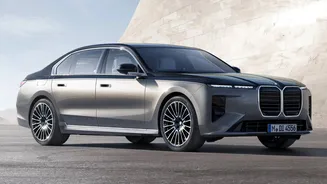
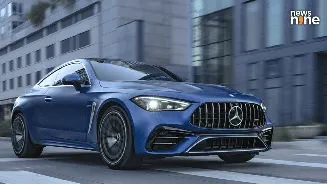
Within the competitive landscape of electric vehicles, certain manufacturers are distinctly excelling in battery longevity and consistent range performance over the critical early years. Brands such as Cadillac, Ford, Hyundai, Mercedes, and Rivian are reported to exhibit no discernible loss in driving range throughout the first five years of their operational life, including regular driving and charging cycles. This consistent performance is attributed to sophisticated engineering strategies employed by these automakers. These often include reserving a portion of the battery's total capacity as hidden reserves, effectively providing a buffer of miles, and utilizing over-the-air (OTA) software updates that intelligently recalibrate range estimation algorithms as the vehicle ages.
Smart Engineering in Action
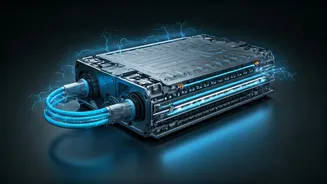
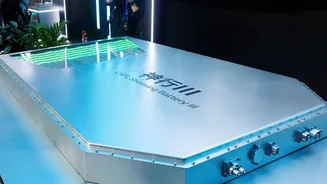
While it's a technical truth that EV batteries do undergo a natural aging process, the tangible impact on a driver's experience is increasingly being mitigated by intelligent software and advanced engineering. Automakers are no longer solely focusing on increasing battery size; instead, they are prioritizing the development of smarter battery management systems. These systems, often enhanced through software updates, are adept at compensating for any minor performance changes over time. The outcome is a driver experience where the subtle effects of battery aging are effectively masked, ensuring that the vehicle's practical usability remains high and aligns with real-world needs, rather than theoretical degradation.
Dismantling a Persistent Fear
Recurrent's extensive dataset, compiled from over a billion miles of driving, serves as a powerful tool in dismantling one of the most deeply ingrained and persistent anxieties associated with the electric vehicle industry: range degradation. This vast collection of real-world usage data provides concrete evidence that counters the fear of diminished battery performance. Furthermore, it underscores a critical shift in automotive manufacturing. The industry is now focusing not just on incrementally larger batteries but on creating smarter, more durable battery technologies that maintain their effectiveness over extended periods, thereby building greater consumer confidence and addressing the core concerns of potential EV adopters.