








Aquatic Acrobats
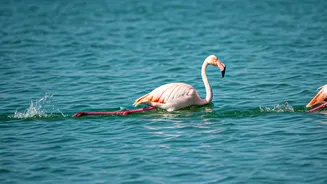
While the iconic image of a flamingo often involves it gracefully standing on one leg in shallow lagoons or gracefully wading through murky waters, this
perception doesn't fully capture their impressive range of motion. These elegant birds are far more adept in the water than their typical portrayal suggests. Beneath their poised exterior lies a robust set of swimming capabilities that allow them to thrive in diverse aquatic landscapes. Many might be surprised to learn that flamingos are not just capable of moving through water; they are genuinely strong swimmers, perfectly equipped to handle environments that extend well beyond the shallows they are so frequently associated with. Their physiology and behavior equip them for more than just a gentle paddle, making them a fascinating study in adaptation within aquatic ecosystems.
Mastering Deep Waters
The common visual of flamingos in their natural habitat often leads to the assumption that they are limited to shallow bodies of water. However, this is a misconception that overlooks their significant adaptability. Flamingos possess the innate ability to navigate and excel in much deeper aquatic conditions than their typical posture might imply. Their strong legs and webbed feet, often overlooked in favor of their distinctive necks and bills, are powerful tools for propulsion. This allows them to move efficiently through water that would be challenging for many other birds. They are not merely surviving in deeper zones; they are actively utilizing them, demonstrating a command of their environment that extends into areas previously thought inaccessible to them. This capability is crucial for foraging and avoiding predators, showcasing a resilience and versatility in their lifestyle.