





The Spicy Dilemma
For many, the vibrant heat of chili peppers is an essential part of a delicious meal. These fiery fruits are a global favorite, seasoned with capsaicin,
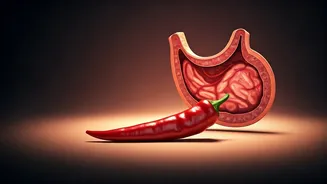
the compound responsible for their characteristic sting. While capsaicin has shown potential anti-inflammatory properties in laboratory settings, raising hopes for health benefits, some scientific investigations have also raised concerns. These studies suggest that capsaicin could potentially promote the proliferation of certain cancerous cells. This dual nature leaves the overall impact of chili consumption on health, particularly concerning cancer risk, a subject of ongoing scientific curiosity and debate, prompting a closer examination of its effects on the human body.
Examining the Evidence
To clarify the relationship between eating chili peppers and the likelihood of developing digestive cancers, a comprehensive review of existing research was conducted. This meta-analysis pooled data from 14 distinct studies, encompassing the experiences of over 11,000 individuals, of whom more than 5,000 had been diagnosed with cancer. The aggregated findings indicated a notable correlation: individuals who consumed the highest quantities of chili peppers demonstrated an approximately 64% greater propensity to develop gastrointestinal cancers when contrasted with those who consumed the least. However, this elevated risk was not uniformly distributed across all types of digestive cancers investigated.
Esophageal Risk Escalates
The research pinpointed a particularly strong association between high chili pepper intake and esophageal cancer. Individuals in the highest consumption group were found to be nearly three times more prone to developing this specific form of cancer compared to those with minimal chili consumption. In contrast, the study did not reveal a statistically significant increase in risk for stomach or colorectal cancers. However, a non-significant trend did emerge for stomach cancer, indicating a higher risk of about 77% in the group that consumed the most chili peppers. The study's authors concluded that their results "suggest that chili pepper is a risk factor for certain GI cancers (e.g., EC)," highlighting the esophagus as a key area of concern.
Global Variations Emerge
Interestingly, the geographical location of the studies appeared to influence the observed risks. Higher associations between chili consumption and gastrointestinal cancer were more prominent in studies originating from Asia, Africa, and North America. Conversely, research conducted in Europe and South America actually indicated a lower risk. A plausible explanation for these regional differences may lie in the typical consumption levels of chili peppers in these areas. In regions where chili intake is considerably higher, the impact on cancer risk could be more pronounced, thereby skewing the overall findings and underscoring the importance of context in dietary recommendations.
Potential Explanations Deepen
Scientists are exploring various hypotheses to explain why the esophagus might be particularly susceptible to the effects of capsaicin. The compound's ability to activate heat and pain receptors leads to the characteristic burning sensation associated with spicy foods. Repeated exposure to this irritation over time could potentially compromise the esophageal lining, making it more vulnerable. Furthermore, variations in the rate at which tissues regenerate in different segments of the digestive system might also contribute to these observed differences. Despite these insights, researchers emphasize that the current evidence is not conclusive, and further investigation is necessary to fully understand these complex mechanisms.
Future Research Awaits
It is crucial to acknowledge that the evidence gathered from these studies is observational. This means that while a correlation between chili pepper consumption and increased risk of certain gastrointestinal cancers has been identified, these studies cannot definitively establish a cause-and-effect relationship. More rigorous research is needed to precisely determine safe consumption levels of chili peppers and to ascertain whether moderate intake carries the same potential risks as very high consumption. Understanding these nuances will be vital for formulating accurate dietary advice and public health recommendations regarding spicy foods.