




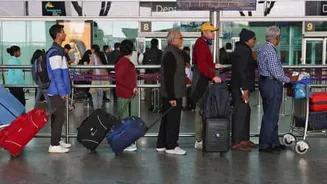

Boosting Efficiency and Safety
The Indian government has given the green light for the continuation of the Immigration, Visa, Foreigners' Registration and Tracking (IVFRT) scheme, now
known as IVFRT 3.0, for an extended period of five years, from 2021 to 2026. This crucial initiative is being bolstered with a significant investment of Rs 1,308.11 crore, underscoring its importance in modernizing India's immigration and visa services. The primary objective is to elevate these services, making them not only faster and more efficient but also considerably safer. By focusing on advanced technological solutions and infrastructure revamps, IVFRT 3.0 aims to significantly enhance the capabilities of both immigration and security agencies. This not only promises a smoother passenger experience for genuine travelers but also strengthens the nation's border management systems, providing a more robust defense against illegal immigration and other security concerns. The anticipated boost to tourism and trade from this initiative is expected to contribute positively to India's economic growth trajectory.
Technological Transformation of Services
The next phase of the IVFRT scheme, IVFRT 3.0, is set to introduce cutting-edge technological advancements and revamp core infrastructure to ensure a seamless and secure immigration ecosystem. This updated approach is a direct response to the increased demands and complexities following the enactment of the Immigration and Foreigners Act, 2025. The scheme is strategically designed to concentrate on three key areas: pioneering technology innovations, transforming fundamental infrastructure, and optimizing service delivery through technology. This modernization drive will bring about features such as mobile-based services for greater convenience, self-service kiosks to expedite passenger processing, unified digital platforms for integrated operations, and upgraded data centers for real-time data sharing among authorized agencies. These advancements are crucial for ensuring smooth passenger movement and enhancing the efficiency of security protocols, ultimately leading to a more streamlined and secure border management system.
Measurable Improvements in Travel
The IVFRT initiative has already demonstrated substantial positive impacts on visa processing and immigration clearance over the past decade. It has successfully implemented a completely contactless and faceless visa application process, which includes online appointment scheduling and payment functionalities, greatly enhancing user convenience. Recent data shows that over 91% of e-visa applications are processed within a swift 72-hour timeframe. Furthermore, the average time taken for passenger clearance at immigration checkpoints has been significantly reduced to approximately 2.5 to 3 minutes, which incorporates biometric verification, a marked improvement from the previous manual processes that took around five to six minutes. At select airports, the introduction of automated e-gates, part of the Fast Track Immigration-Trusted Traveller Programme, has further reduced clearance times to an astonishing 30 seconds for eligible travelers, showcasing the effectiveness of technological integration in speeding up international travel.
Expanded Reach and Economic Impact
The coverage of the IVFRT platform has seen consistent expansion, now encompassing 117 immigration posts, 15 Foreigners Regional Registration Offices, and 854 district-level registration authorities across India. This widespread integration facilitates a comprehensive digital network for all immigration-related services. The continuation of IVFRT is projected to generate substantial economic benefits by promoting international mobility and improving the ease of doing business in India. Sectors such as tourism, aviation, hospitality, trade, and medical travel are expected to benefit immensely from enhanced service delivery and improved security assurances. This strategic transformation goes beyond a mere technical upgrade; it is a concerted effort to establish a world-class immigration and visa system that actively supports economic growth and creates employment opportunities by making India a more accessible and attractive destination for global visitors and businesses.
Evolution Towards World-Class Standards
The IVFRT platform has undergone a significant evolution, expanding its service offerings from a limited number of digital functionalities to providing over 30 distinct immigration-related services. This growth reflects the increasing sophistication and scale of India's immigration management framework. The extended phase of the scheme is designed to deepen this transition, further integrating processes and elevating the user experience without compromising the nation's security objectives. The Union Cabinet's approval for the extension, with a budget outlay of Rs 1,800 crore, aims to build upon the existing digital framework that securely interlinks visa issuance, immigration clearance, and foreigner registration. This initiative, initially cleared in 2010 and subsequently extended, is geared towards modernizing immigration processes to align with evolving travel demands and emerging security challenges, ensuring India remains at the forefront of secure and efficient border management.