
Dark Matter Unveiled
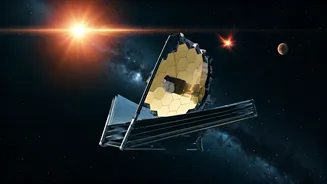
Astronomers are actively using the James Webb Space Telescope to map the hidden dark matter within the universe. This groundbreaking effort is yielding
unprecedented views, assisting researchers in charting previously unseen areas. The telescope's advanced capabilities enable the identification of dark matter's distribution, a critical component in grasping the structure and evolution of the cosmos. The process involves analyzing the gravitational lensing effects caused by dark matter, which distorts light from distant galaxies. Through these observations, scientists are steadily building a comprehensive map, deepening their insights into the universe's fundamental architecture. This research promises to unlock key answers to the universe's behavior and the nature of the dark matter itself.
Solar Flare Insights
The European Space Agency's Solar Orbiter is providing fresh perspectives on the mechanics behind solar flares, unraveling how magnetic avalanches trigger these powerful bursts of energy. This probe is orbiting the sun, capturing high-resolution images and data to analyze solar activity in greater detail. Scientists have identified the connection between the buildup of magnetic energy and the subsequent release of solar flares. These events have far-reaching impacts, influencing the Earth's space environment. By observing the solar corona, researchers are investigating the complex interplay of magnetic fields and plasma, and this helps to predict the likelihood of these events. The goal of this research is to improve our understanding of the sun's dynamic nature and its influence on our planet.
MAVEN's Revival
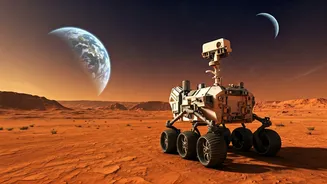
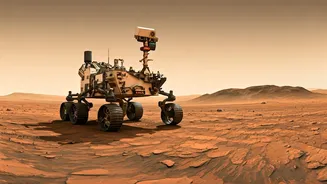
NASA worked to restore contact with the MAVEN Mars Orbiter after weeks of silence, showcasing the challenges inherent in space communication. Scientists had to employ various strategies to re-establish a connection with the spacecraft. The orbiter's primary function is to study the Martian atmosphere, unraveling its composition and how it interacts with the solar wind. A team of engineers and scientists carefully troubleshooted issues, making efforts to get the orbiter back online. The successful restoration signifies a crucial achievement in space exploration. It has given the scientists access to critical data. This helps improve understanding of the Martian environment and its potential for past or present habitability. Further exploration and study are made possible thanks to the MAVEN mission.