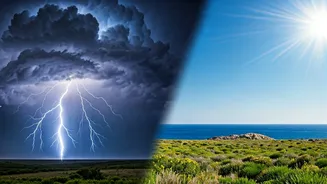







Defining Atmospheric Conditions
Weather pertains to the atmosphere's condition over a brief period. It reflects the atmosphere's instantaneous state, incorporating elements like temperature,
precipitation (rain, snow, hail), wind speed and direction, cloud cover, and humidity at a specific location. Weather can shift rapidly, changing hourly, daily, or weekly. Think of a sunny morning transforming into an afternoon thunderstorm. Weather reports, often presented daily, offer insight into these immediate atmospheric conditions. Therefore, when discussing the possibility of a picnic or the kind of clothing appropriate for the day, one would be considering the weather.
Long-Term Atmospheric Patterns
Climate describes the average weather patterns of a specific region over an extended period. Typically, climate is measured over at least 30 years to account for seasonal variations and natural fluctuations. This encompasses not just the average temperature, but also the range of temperatures, the frequency of extreme weather events, and the typical amounts of precipitation. Unlike weather, which can change rapidly, climate is a longer-term phenomenon. For example, a location might have a tropical climate, characterized by high temperatures and humidity year-round, or a polar climate, with long, cold winters and short, cool summers. Climate data assists in understanding long-term climate change patterns.
Distinguishing Weather and Climate
The main difference between weather and climate lies in their time scales. Weather is a snapshot of the atmosphere at a particular moment, while climate looks at the broader picture over many years. Weather can be unpredictable: you might experience a surprise rain shower, or an unseasonably warm day. Climate, however, reveals long-term trends and averages. For instance, if a region has unusually hot summers for several years, scientists might suggest that the climate is changing, or that the climate is trending towards the long term trend of being warmer than normal. This also helps in assessing climate change impacts.
Why the Difference Matters
Understanding the distinction between weather and climate is essential for various reasons. Weather influences daily decisions, like planning outdoor activities or deciding what to wear. Climate data informs infrastructure planning, agriculture, and resource management. Knowing the difference also supports our understanding of environmental changes. Scientists and policymakers use climate data to monitor the effects of climate change, such as rising global temperatures, changing precipitation patterns, and the increased frequency of extreme weather events. This knowledge guides mitigation efforts and helps develop adaptation strategies.