





Mars Mission Breakthrough
NASA has achieved a significant milestone in space exploration with the successful activation of a novel lithium plasma thruster, setting a new benchmark
for electric propulsion in the United States. This cutting-edge engine is designed to revolutionize interplanetary travel, particularly for future human expeditions to Mars. By utilizing plasma, a superheated state of matter, this thruster offers a more fuel-efficient alternative to conventional chemical rockets. The recent test, conducted at NASA's Jet Propulsion Laboratory (JPL) in Southern California, saw the engine operate at unprecedented power levels, exceeding those of any electric thruster currently in use on NASA spacecraft. This successful demonstration is a critical step in the ongoing development and testing phase, aiming to inform the design of future systems and bring the ambitious goal of landing American astronauts on the Red Planet closer to reality. NASA Administrator Jared Isaacman highlighted the importance of this advancement, emphasizing that the thruster's performance validates continued investment in technologies that will enable humanity's next great steps into the cosmos.
Plasma Propulsion Explained
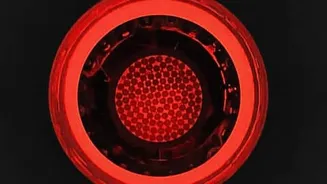
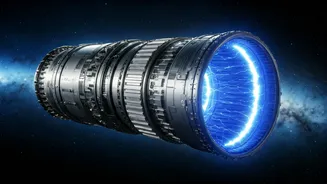
The record-breaking engine operates using lithium metal vapor and falls under the category of magnetoplasmadynamic (MPD) thrusters. These sophisticated systems generate thrust by employing a dynamic interplay of electric currents and magnetic fields to expel plasma at exceptionally high velocities. During a series of five distinct ignition sequences, the thruster's tungsten electrode visibly glowed with intense white heat, reaching temperatures exceeding 5,000 degrees Fahrenheit (2,800 degrees Celsius). These rigorous tests were carried out within JPL's specialized Electric Propulsion Lab, which is equipped with a unique facility designed to safely evaluate metal-vapor-fueled electric thrusters capable of operating at megawatt-class power levels. This facility is a national asset, enabling researchers to push the boundaries of electric propulsion technology. The data gathered from these tests will be invaluable for the subsequent stages of development, guiding engineers as they refine the design and performance of these advanced propulsion systems.
Why Electric Propulsion?
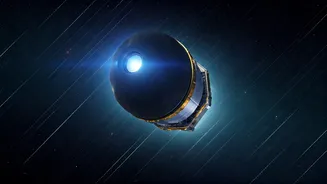
Electric propulsion systems offer a profound advantage in terms of fuel efficiency, requiring up to 90% less propellant compared to traditional chemical rockets. Unlike the sudden, powerful thrust provided by chemical engines, electric propulsion delivers a continuous, gentle acceleration over extended periods, gradually building up immense speeds. NASA already leverages this technology on missions such as Psyche, which currently utilizes the agency's most powerful electric thrusters, capable of accelerating the spacecraft to speeds of 124,000 mph. The newly tested lithium-fed MPD thruster holds the potential to generate significantly greater thrust than existing electric propulsion systems. Although MPD technology has been under research since the 1960s, it has yet to be implemented in operational space missions. The recent JPL test demonstrated the engine reaching a peak power of 120 kilowatts, which is more than 25 times the power of the thrusters currently powering the Psyche mission. This leap in power signifies a major advancement in the feasibility of using MPD thrusters for deep-space exploration.
Scaling for Mars
The path forward involves scaling up the power output of these individual thrusters to ranges between 500 kilowatts and 1 megawatt. A primary engineering challenge lies in ensuring that the hardware can withstand the extreme temperatures and stresses associated with prolonged operation. For a crewed mission to Mars, the total power requirement is estimated to be between 2 and 4 megawatts. This suggests that multiple MPD thrusters would likely need to operate continuously for extended durations, potentially exceeding 23,000 hours. Scientists are optimistic that lithium-fed MPD engines, when coupled with nuclear power sources, could significantly reduce the overall launch mass of spacecraft. This efficiency is crucial for carrying the substantial payloads necessary for human missions to Mars, enabling longer stays and more extensive exploration of the Red Planet's surface. This collaborative effort, involving JPL, Princeton University, and NASA's Glenn Research Center, is funded by NASA's Space Nuclear Propulsion project, underscoring the agency's commitment to developing megawatt-class nuclear electric propulsion systems for future Martian endeavors.