






Reusable Rocket Triumph
On April 19, 2026, a new era in space exploration dawned as Blue Origin successfully launched its New Glenn rocket, featuring a booster that had already
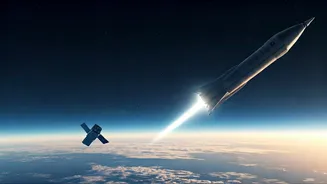
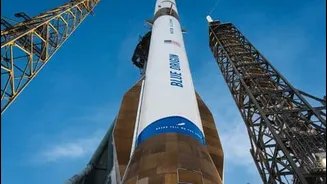
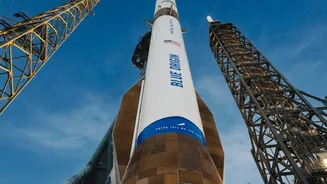
completed a previous mission. This momentous flight, the third for the New Glenn program, lifted off from Cape Canaveral, Florida, at 7:25 a.m. ET. Onboard was a communications satellite destined for AST SpaceMobile, a company based in Texas. This event signifies a major leap forward for Blue Origin in its ambitious goal of making space travel more accessible and economically viable through the innovative use of reusable rocket technology. The 98-meter-tall marvel demonstrated the potential for reducing the cost of accessing space by giving flight hardware a second life, a concept central to the future of space commerce and exploration.
Booster's Second Life
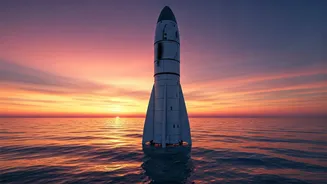
The hero of this mission, a first-stage booster affectionately nicknamed "Never Tell Me the Odds," had previously flown on the NG-2 mission in November 2025. During that inaugural flight, it flawlessly delivered two NASA spacecraft into orbit before executing a precise landing on one of Blue Origin's autonomous drone ships positioned in the Atlantic Ocean. On this latest flight, it repeated its impressive performance, separating from the upper stage and making a propulsive, pinpoint landing on the "Jacklyn" floating platform. This capability is crucial, as Blue Origin's boosters are engineered to endure up to 25 flights, underscoring the company's strategy to build its long-term economic model and maintain competitiveness with established players like SpaceX's Falcon 9 through extensive reusability.
A Mixed Mission Outcome
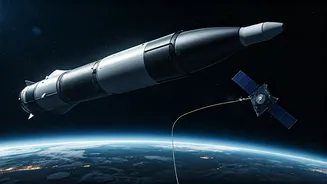
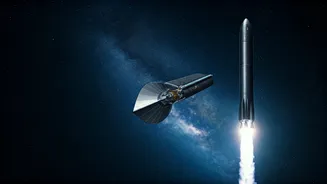
While the successful reuse of the New Glenn booster was a monumental achievement, the mission was unfortunately marred by a critical failure further up the rocket. The satellite, identified as BlueBird 7, was intended for a low-Earth orbit but was ultimately lost due to an anomaly with the second-stage launch vehicle. This malfunction caused the satellite to re-enter the Earth's atmosphere prematurely. The setback highlights the ongoing challenges in achieving mission success beyond just booster recovery. Given Blue Origin's plans to utilize the New Glenn rocket for crucial future endeavors, including NASA missions to the Moon and the assembly of space-based structures, proving the overall reliability of the entire launch system, not solely the reusability of its first stage, is now an even more pressing priority.