







Launch Anomaly Explained
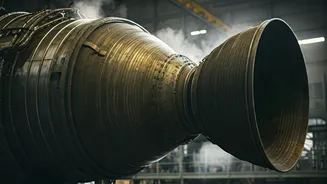
The Federal Aviation Administration (FAA) has officially designated the recent incident involving Blue Origin's New Glenn rocket as a "mishap." This classification
follows a launch from Cape Canaveral where the rocket's upper stage failed to correctly insert its satellite payload into the intended orbit, despite a successful initial liftoff. The FAA's notification extended to NASA, the NTSB, and the U.S. Space Force, highlighting the seriousness of the event. Mishap investigations are standard procedure, aimed at ensuring public safety, pinpointing the underlying cause of the failure, and establishing necessary corrective measures to prevent recurrence. A crucial outcome of these investigations is the determination by the FAA that all systems, processes, and procedures related to the event no longer pose a risk to public safety, which is a prerequisite for granting clearance for future flights.
Grounding and Investigation
As a direct consequence of the mishap, the FAA has grounded Blue Origin's New Glenn rocket operations, mandating a comprehensive investigation before flights can resume. This particular mission, the third for the New Glenn rocket, involved using a previously flown booster for the first time. While both the booster's liftoff and subsequent landing were reported as successful, the satellite payload, identified as BlueBird 7 for AST SpaceMobile, was unfortunately placed into an 'off-nominal orbit.' Although Blue Origin did not initially provide extensive details, it was understood that the mission plan included a crucial second-stage engine relight after reaching orbit to achieve the necessary altitude for deployment. AST SpaceMobile later confirmed that this relight did not occur, resulting in the satellite being deployed at an altitude insufficient for its operational capabilities. The company also indicated that the satellite lacked the necessary onboard thruster capacity to self-correct and reach its intended orbital path.
Payload Loss and Future Plans
The failure to reach the correct orbit means that AST SpaceMobile will now have to deorbit the BlueBird 7 satellite, which would have been its eighth operational satellite in orbit. The financial implications of this lost hardware are expected to be covered through insurance. Furthermore, Blue Origin's plan to execute a third engine burn of the upper stage after satellite deployment to guide it towards a controlled splashdown in the ocean also did not materialize as intended. This incident mirrors previous groundings issued by the FAA to other major rocket companies, including SpaceX's Falcon 9 and Starship, following similar operational issues. Blue Origin's suborbital New Shepard rocket has also experienced groundings in the past. Such investigations can be lengthy, sometimes spanning several months before a rocket receives clearance to fly again. However, there have been instances where the return-to-flight timeline was considerably shorter, such as the Falcon 9's 15-day grounding in 2024 after an upper-stage problem.
Launch Cadence and Impact
Prior to this incident, Blue Origin had received authorization for up to 12 launches per year for the New Glenn rocket. Earlier statements from CEO Dave Limp had indicated an ambitious target of at least eight New Glenn launches for the current year. The company has currently announced two further upcoming missions, including the deployment of the MK1 Blue Moon lunar lander, anticipated to launch before the close of summer. Additionally, Amazon is reliant on New Glenn for planned launches that are integral to its Project Kuiper satellite constellation. The New Glenn rocket first launched in January 2025, marking a significant achievement as the first commercial rocket to successfully reach orbit on its inaugural flight. Its second mission, in November, was tasked with delivering satellites towards Mars. This current grounding marks the second time New Glenn has been halted. The first occurred after its debut mission, when the booster's landing maneuver was unsuccessful, leading to an FAA clearance to resume flights approximately 2.5 months later.