




Reversing the Melt
The Arctic is a critical barometer for global climate health, experiencing warming at rates significantly higher than the rest of the planet. This rapid
thaw has profound implications, not only for polar ecosystems but also for global weather patterns and sea levels. Recognizing the urgency, scientists and engineers are developing innovative technologies designed to directly combat the shrinking of sea ice. These initiatives move beyond emission reduction strategies, focusing instead on actively rebuilding the ice cover. The goal is to create a more resilient Arctic environment, mitigating some of the most severe consequences of global warming and potentially averting disastrous climate tipping points. This forward-thinking approach represents a significant shift in how we address environmental challenges, exploring direct intervention as a means of restoration.
Technological Innovations
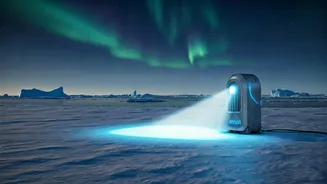
A range of ingenious technologies are being explored to facilitate the regrowth of Arctic sea ice. One promising avenue involves advanced methods for ice nucleation and acceleration, potentially mimicking natural processes but on a significantly enhanced scale. Imagine specialized equipment designed to promote ice formation during colder periods or to insulate existing ice from warmer currents. Other concepts explore the use of reflective materials or structural enhancements to preserve ice and slow down melting. Furthermore, researchers are investigating ways to harness localized energy sources or natural phenomena to create microclimates conducive to ice growth. These are not simply theoretical exercises; many of these ideas are moving into experimental phases, demonstrating a commitment to finding tangible solutions to one of the planet's most pressing environmental crises. The diversity of these approaches underscores the complexity of the problem and the ingenuity being applied to solve it.
Confronting Climate Tipping Points
The accelerating melt of Arctic sea ice is a significant indicator of Earth's systems approaching 'doom loop' tipping points. These are critical thresholds where gradual changes can trigger abrupt and irreversible shifts in the climate, leading to cascading environmental consequences. For instance, reduced ice cover leads to less sunlight reflection and more heat absorption by the ocean, further accelerating warming – a dangerous positive feedback loop. The potential for widespread permafrost thaw, releasing vast amounts of greenhouse gases like methane, also poses a grave threat. Technologies aimed at regrowing Arctic sea ice are seen as a potential intervention point, a way to counteract these dangerous feedback mechanisms. By stabilizing or increasing ice cover, these efforts could help to maintain albedo (reflectivity), regulate ocean temperatures, and mitigate the release of stored carbon, thereby offering a pathway to avoid or delay the onset of these catastrophic tipping points and preserve planetary stability.