







Google's Energy Leap
Google has announced a groundbreaking achievement in managing the energy consumption of its data centers. The company is now the first cloud provider to
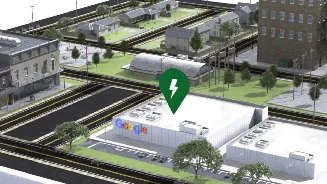
successfully integrate a substantial 1 gigawatt (GW) of flexible demand into its long-term agreements with utility providers across the United States. This means Google can dynamically adjust its energy usage, either reducing or shifting its demand when the electrical grid experiences peak loads. Such an ability is crucial for utility companies, enabling them to better balance the intricate relationship between electricity supply and demand, and to more accurately plan for future infrastructure needs. This innovation is heralded as a significant step towards sustainable data center expansion, while also contributing to keeping energy costs down for local communities. The agreements span several key utility partners, including Indiana Michigan Power, Tennessee Valley Authority, Entergy Arkansas, Minnesota Power, and DTE Energy, underscoring the widespread adoption and impact of this smart energy management system.
AI's Energy Footprint
The rapid advancement and widespread adoption of artificial intelligence (AI) are placing unprecedented demands on computing infrastructure, consequently driving a surge in energy consumption. This escalating need has prompted prominent figures like Tesla CEO Elon Musk to comment on the sheer scale of computing power being brought online. Musk's observation, shared in response to Google CEO Sundar Pichai's announcement, highlights a growing understanding that the burgeoning field of AI requires a staggering amount of energy. As more sophisticated AI models are developed and deployed, the energy requirements of the data centers that house and power them will continue to escalate. This dynamic exchange between Google's proactive energy management and Musk's cautionary note underscores the critical challenge of scaling technological innovation, particularly AI, in an environmentally conscious and economically sustainable manner. It emphasizes the delicate balance required to meet future technological demands without compromising essential resources or overburdening energy grids.
Grid Stability and Cost Savings
Google's innovative approach to managing data center energy consumption offers substantial benefits not only for the company but also for the broader energy ecosystem. By integrating 1 GW of flexible demand into utility contracts, Google empowers power companies to maintain grid stability more effectively. This capability is particularly valuable during periods of high electricity demand, often referred to as peak times. When Google can shift or reduce its energy usage during these critical junctures, it alleviates pressure on the grid, preventing potential blackouts or service disruptions. Furthermore, this system aids utilities in their long-term planning, reducing the necessity for them to construct costly new power generation or transmission infrastructure solely to meet infrequent peak demands. This cooperative model translates into tangible cost savings for utilities, which can, in turn, be passed on to consumers, helping to keep local electricity prices more affordable. The system essentially acts as a sophisticated tool for load balancing, ensuring a more reliable and efficient energy supply for everyone.