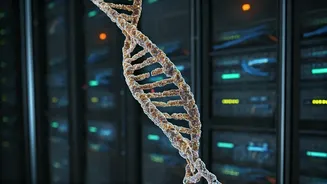







Pangenomics Explained
Pangenomics, in its essence, represents the study of the complete genetic makeup within a specific species. Instead of focusing on a single reference genome,
pangenomics incorporates all the genetic variations found among different individuals of the same species. Think of it like a comprehensive genetic library, including everything from the most common DNA sequences to unique and rare genetic elements. This broader perspective provides a more complete understanding of a species' genetic diversity, revealing insights into traits, disease susceptibility, and evolutionary relationships. The ultimate aim of pangenomics is to create a detailed map of the entire genetic spectrum, providing a robust foundation for scientific discoveries in areas like healthcare and agriculture, by revealing the hidden variations that may impact their evolution and survival.
The Data Dilemma
The field of pangenomics faces a significant hurdle: the sheer volume of data involved. Every individual genome contains a substantial amount of information, and when you combine the genomes of many individuals, the dataset becomes enormous. The storage, processing, and analysis of such vast datasets are resource-intensive tasks, demanding significant computational power and storage capacity. Traditional methods often struggle to keep up, leading to bottlenecks and limiting the scope of pangenomic studies. This data deluge presents a challenge for researchers aiming to explore the full extent of genetic variations within a population. The complexity and size of these genomic datasets can slow down research, which means potential discoveries in disease and other areas are put on hold due to the complexities of storing and analyzing these large data sets.
Compression to the Rescue
Data compression is proving to be a game-changer in pangenomics, offering a powerful solution to the data dilemma. By applying specialized algorithms, researchers can significantly reduce the size of genomic datasets without compromising the integrity of the genetic information. This means that more data can be stored in less space, leading to faster data processing, lower storage costs, and quicker analysis. Compression techniques employ various methods, such as identifying and removing redundant information, to condense the data. Compression has the benefit of allowing scientists to work with more complex data sets and increase efficiency. The effective compression of genomic data is thus transforming the landscape of pangenomics, enabling scientists to explore genetic diversity more efficiently.
Benefits of the Technique
The application of data compression techniques in pangenomics provides multiple benefits. First and foremost, it reduces the need for extensive storage infrastructure, lowering the overall cost of research. Furthermore, compressed data can be transferred more rapidly, enabling smoother collaboration between research groups and accelerating the pace of scientific discovery. Faster processing times also allow researchers to conduct more complex analyses and explore datasets more thoroughly. In essence, data compression acts as an efficiency booster, allowing scientists to work smarter, not harder. This creates a quicker approach for analyzing and processing data and more opportunities to explore the complexities of genetic data without waiting for long processing times.
Impact on Research
The introduction of data compression is significantly impacting pangenomic research, unlocking new possibilities for understanding genetic diversity. Scientists can now analyze larger datasets more efficiently, uncovering intricate patterns and correlations that were previously hidden. This leads to a more comprehensive understanding of the genetic makeup of species, which has implications in various fields. For example, in healthcare, it allows researchers to identify disease-causing genes and develop more effective treatments. In agriculture, it helps in the development of more resilient crops. By enabling deeper exploration of genetic variations, data compression is driving innovation and accelerating scientific breakthroughs in the realm of genetics and its associated fields.
Future Directions
Looking ahead, the integration of data compression in pangenomics promises even more exciting developments. Researchers are continuously refining compression algorithms to achieve even greater efficiency and accuracy. As technology advances, we can expect to see further integration of these techniques with other cutting-edge technologies, such as artificial intelligence and machine learning. This combination could enable more sophisticated analysis, leading to more profound insights into genomic data. Moreover, data compression is likely to become an integral part of the larger field of bioinformatics, enhancing our ability to process and interpret the vast amount of biological data generated today. These advances will play a crucial role in enabling future scientific discoveries.