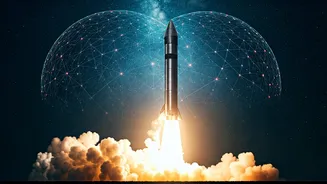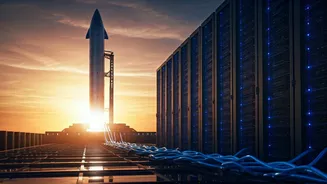








The Space Solution
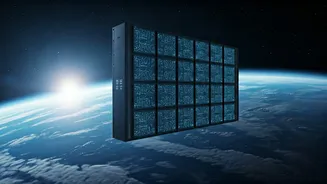
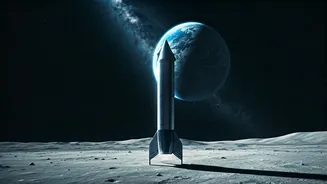
Elon Musk, the visionary behind SpaceX, has put forth a bold prediction: in just three years, the most economical location for establishing artificial
intelligence data centers will be in outer space. This forward-thinking statement stems from the inherent challenges associated with scaling power generation on our home planet. Musk points out that securing sufficient and consistent power for the massive computational demands of AI is proving more difficult to achieve on Earth than it is to facilitate in the vacuum of space. Furthermore, a significant advantage of locating data centers in space is the elimination of the need for extensive battery systems that are currently required to bridge the gap during nighttime hours on Earth, thereby reducing operational complexity and cost.
Terrestrial Power Hurdles
The rapid advancement and widespread adoption of artificial intelligence are placing unprecedented demands on global power infrastructure. Building and expanding data centers on Earth to meet these burgeoning computational needs is encountering significant bottlenecks, primarily related to power availability and distribution. Musk's assertion highlights that overcoming these terrestrial limitations is a more arduous task than developing off-world alternatives. The sheer energy required for training and running advanced AI models necessitates a robust and continuous power supply, a challenge that is becoming increasingly difficult to satisfy with existing Earth-bound energy grids and renewable sources alone, especially when considering the intermittent nature of some renewable energy.
Economic Advantages Off-World
The prospect of data centers in space offers compelling economic benefits that could reshape the AI landscape. By sidestepping the substantial costs associated with terrestrial power infrastructure, including the procurement of land, construction, and ongoing energy expenses, space-based facilities could present a more financially viable option. The elimination of battery dependency is a key factor in this cost reduction, as large-scale battery arrays are not only expensive to manufacture and maintain but also add significant weight and complexity to operations. Space, with its constant exposure to solar radiation, can provide a more consistent and potentially cheaper power source, free from the diurnal cycles that necessitate energy storage solutions on Earth.