


A Moon's Ancient Origins
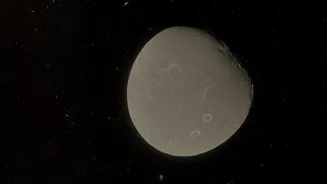
For decades, scientists believed Nereid, Neptune's third-largest moon, was a cosmic wanderer captured by the ice giant from the outer solar system's Kuiper
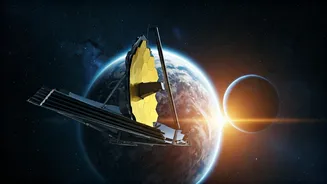
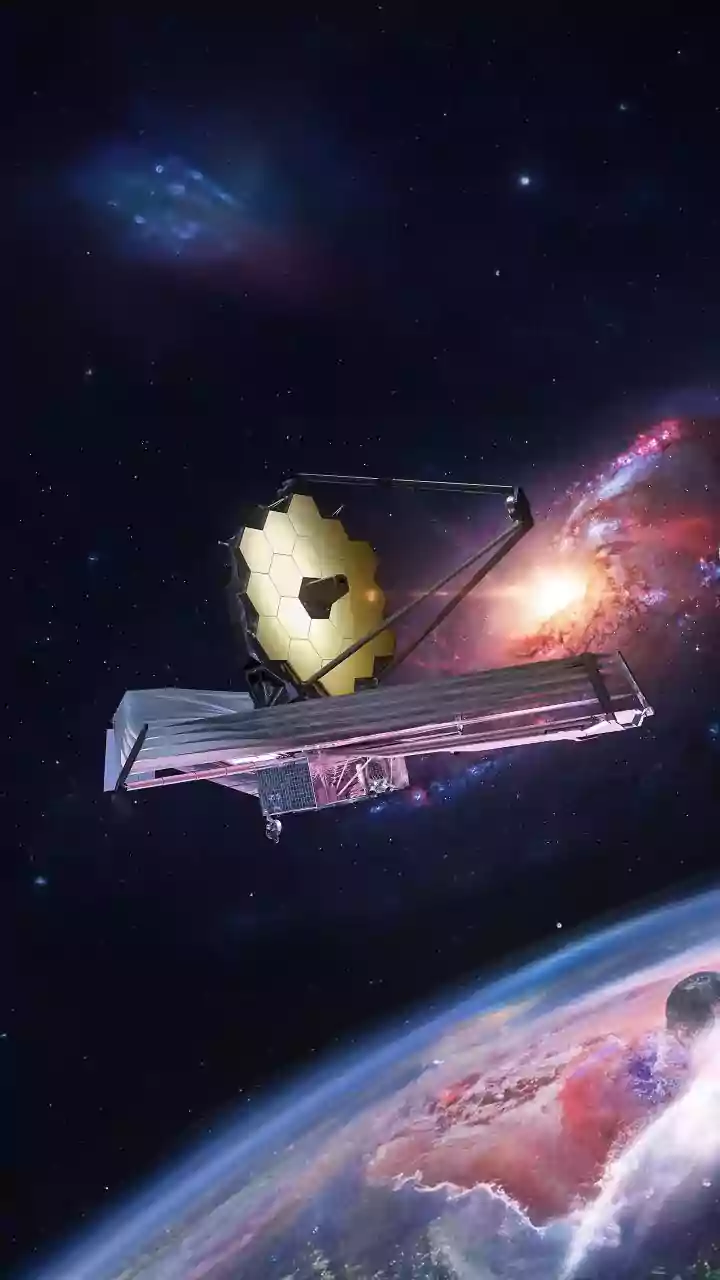
Belt. This theory stemmed from its peculiar, highly elliptical orbit, which suggested it had been yanked from a more stable path. However, recent, groundbreaking observations from the James Webb Space Telescope (JWST) are painting a dramatically different picture. The JWST's powerful instruments have allowed for detailed analysis of Nereid's surface composition, revealing a significant presence of water ice. This finding is crucial because it differentiates Nereid from the typical makeup of Kuiper Belt objects. The telescope's ability to compare Nereid's spectral signature directly with other celestial bodies it has observed means scientists can now confidently compare 'apples to apples,' leading to a reassessment of Nereid's true origin story and its place in the solar system's ancient past.
Neptune's Moon Mystery
The accepted narrative for most of Neptune's 16 known moons is that they were captured by the planet's immense gravitational pull. This is particularly challenging to verify at Neptune because the planet lacks the stable, regular satellite system seen around other gas giants like Jupiter. Most of Neptune's moons are small and occupy irregular orbits, with the exception of Triton, the largest moon, which constitutes nearly all of the Neptunian system's mass. Triton's orbit is notably 'retrograde,' meaning it travels in the opposite direction of Neptune's rotation, a strong indicator that it too is a captured object. Its composition also aligns more closely with objects from the Kuiper Belt than with Neptune itself. In this complex environment, Nereid's unusual characteristics made it a prime candidate for capture, but the new JWST data challenges this long-held assumption, suggesting a more primordial existence for this distant moon.
Simulations and New Theories
The prevailing theory of moon capture at Neptune has been complicated by the arrival of Triton. According to new simulations, Triton's dramatic entry into Neptune's system likely caused significant upheaval. As Triton was captured from the Kuiper Belt, its gravitational influence would have dramatically altered the orbits of any pre-existing moons. These simulations suggest that the chaotic interactions following Triton's capture could have indeed produced an object with an orbit similar to Nereid's. However, the JWST's compositional analysis of Nereid, indicating a distinct difference from known Kuiper Belt objects and a higher water ice content, casts doubt on this capture scenario as the sole explanation. This points towards Nereid potentially being a relic from Neptune's initial formation, a survivor of the primordial disk from which the planet itself coalesced billions of years ago.
Window to Early Solar System
The implications of Nereid being an original moon of Neptune extend far beyond our own solar system. Understanding how moons form around ice giants like Neptune and Uranus is a significant challenge for planetary scientists, especially given that planets of this size are the most common type of exoplanet discovered. Uranus, for instance, has a highly unusual axial tilt, suggesting a cataclysmic event in its past that likely destroyed its first generation of moons. Neptune, too, seems to be missing this primordial satellite population, with its current inner moons thought to be remnants of original moons that were broken apart after Triton's capture. If Nereid is indeed the only intact, original satellite remaining from Neptune's formation, it represents an invaluable, direct window into the conditions and processes of the early solar system, offering insights crucial for understanding planetary system formation across the cosmos.