





Unveiling the Messier Catalog
The Messier Marathon centers on a historic list of 110 celestial objects compiled by the French astronomer Charles Messier in 1774. Initially, Messier created
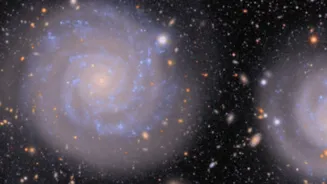
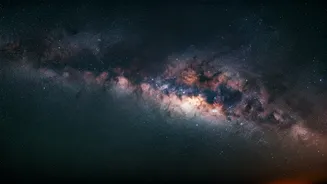
this catalog not as a guide to beautiful sights, but as a practical "do not fly" list. He was hunting for comets, and these fuzzy patches of light—galaxies, nebulae, and star clusters—kept distracting him, often being mistaken for the comets he sought. Today, this catalog has transformed into a beloved "ultimate scavenger hunt" for amateur astronomers worldwide. It features some of the most renowned deep-sky objects visible from Earth, each bearing the designation 'M' followed by its number. Iconic examples include the Andromeda Galaxy (M31), our closest large galactic neighbor; the Orion Nebula (M42), a stunning stellar nursery visible within the constellation Orion's belt; and the Pleiades star cluster (M45), famously known as the Seven Sisters, a brilliant collection of blue stars. The beauty of these objects is their accessibility; most can be observed with common backyard telescopes or even binoculars under clear, dark skies, with some, like the Orion Nebula, being bright enough for naked-eye viewing.
The Messier Marathon Explained
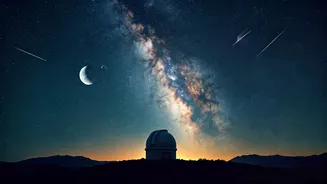
The Messier Marathon is an ambitious astronomical endeavor where participants strive to observe all 110 objects from Charles Messier's catalog within a single night, from dusk until dawn. This challenge is only achievable during a specific period in late March or early April. This timing is crucial due to Earth's orbital position, which allows all 110 objects to be visible in the night sky over the course of these few weeks. In 2026, this prime window for the marathon is set to run from March 14th to March 22nd. Historically, completing this marathon was a significantly more arduous task, heavily reliant on manual "star-hopping" techniques, which involved painstakingly navigating paper star charts to locate each object. This method was often slow, meditative, and frustrating. However, the advent of digital sky maps and computerized "GoTo" telescopes has streamlined the process considerably. These modern tools automatically locate and point towards celestial targets, making the marathon more accessible. Despite these technological advancements, successfully completing the Messier Marathon still demands meticulous planning, considerable stamina, and the ability to adapt to real-time astronomical conditions like cloud cover, requiring observers to start immediately after sunset and continuously scan the sky as new targets emerge.
Timing is Everything
The unique window for undertaking the Messier Marathon, allowing observers to potentially see all 110 cataloged objects in one night, occurs annually in late March and early April. This specific timing is a result of an "orbital coincidence"—Earth's position relative to the sun creates a period where the sun occupies a relatively empty patch of the sky. This celestial arrangement means that the Messier objects are not obscured by daylight for as long as they are throughout the rest of the year. The original catalog was compiled by Messier from Paris, and while his location and equipment influenced the catalog's scope, a degree of "dumb luck" also played a role in its suitability for this challenge. Practically speaking, this means that the sun's position during this period allows for a "dusk-to-dawn sprint" to view all 110 objects. To further enhance the viewing experience and increase the chances of success, the optimal time within this window is during a new moon. The absence of moonlight during this phase dramatically improves the visibility of faint galaxies, nebulae, and star clusters, making them much easier to detect against the dark sky.
Your Marathon Prep Guide
Embarking on the Messier Marathon requires thorough preparation to maximize your chances of success. While no official organization governs the event, local astronomy groups and observatories often facilitate Messier Marathon gatherings, providing an excellent opportunity to join experienced stargazers. If you plan to tackle the challenge solo, several key factors come into play. Firstly, your geographic location is important. The full Messier Marathon is primarily a Northern Hemisphere event, as some objects lie too far south to be easily observed from many Southern Hemisphere locations. Similarly, observers at very high northern latitudes might not be able to see all 110 objects. In such cases, many astronomers opt for a "mini" Messier Marathon, focusing on the objects accessible from their specific location. Secondly, selecting an observation site with broad, unobstructed horizon views is essential. Depending on your latitude, some Messier objects will appear low in the sky, making open landscapes like fields, hilltops, or beaches ideal vantage points. Critically, you must also seek out locations with minimal light pollution. Finally, meticulous planning of your observation sequence is crucial, as not all objects are visible throughout the entire night. It's recommended to tackle objects in the west first, before they set, and to start your observation well before sunset, aiming to capture your first target as soon as twilight permits.