






A Major Find
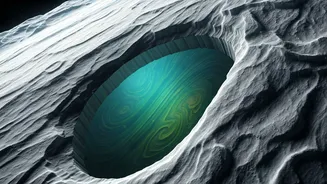
NASA's recent discovery on Jupiter's moon has stirred excitement. Scientists have identified a key chemical, crucial for the emergence of life, in this
distant lunar environment. This finding is a crucial step towards understanding the possibilities of life beyond our planet. It provides significant information for astrobiology and the potential for life in extreme environments.
Life’s Building Blocks
The chemical identified plays a pivotal role in the development of life, according to experts. It is a fundamental component necessary for complex biochemical processes. This discovery highlights the widespread distribution of life's essential ingredients in the universe. It encourages further research to search for life beyond Earth, and scientists are now focusing their efforts on understanding how this chemical contributes to the likelihood of life.
Jupiter's Moon Explored
The particular moon where the chemical was detected is of great scientific interest. Its icy surface and potential subsurface ocean are thought to harbor conditions conducive to life. The discovery increases the likelihood of finding habitable environments on this moon. Scientists are planning further missions to examine this moon and the potential for life in its unique setting.
Implications for Research
The finding has major implications for current research. It challenges previous assumptions and opens new avenues for exploration. Scientists will continue to analyze data from missions that have visited Jupiter's moon. This includes investigating the chemical's origin, distribution, and its potential interactions with other elements to determine the potential of life. These studies are critical for gaining a deeper understanding of the possibilities for life beyond our planet.
Future Space Missions
This discovery also influences future space missions. Space agencies are considering new strategies and designing equipment to study Jupiter's moon. Missions will focus on directly exploring the moon's subsurface ocean. They plan to collect samples to analyze its chemical composition to search for further evidence of life. These missions aim to shed light on our place in the universe.