




Record-Breaking Journey
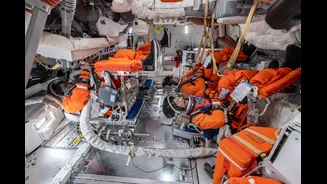
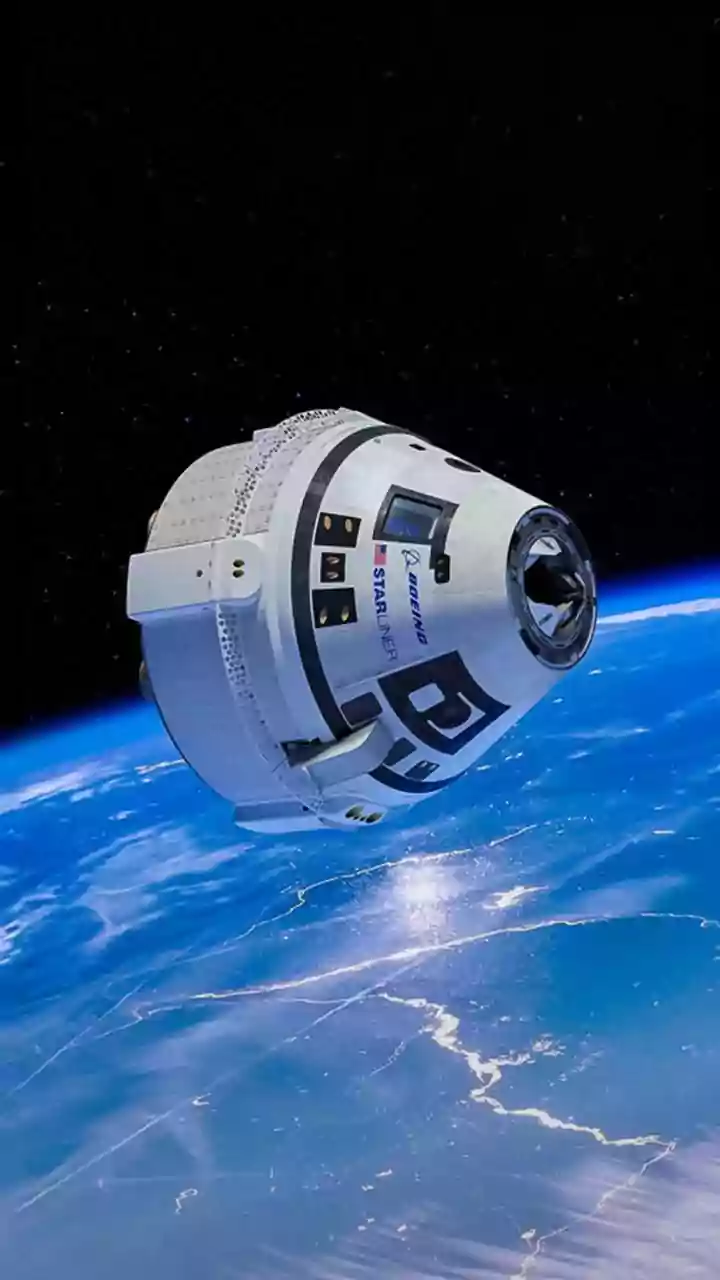
The Artemis II mission has etched its name in the annals of space exploration by completing a remarkable flyby of the Moon. This pivotal mission saw its four-person
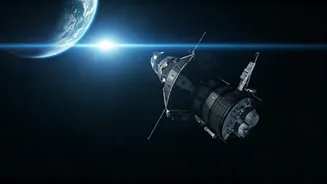
crew venture farther from Earth than any humans before them, shattering the previous distance record held since 1970. Aboard the advanced Orion spacecraft, the astronauts embarked on a journey that took them an astounding 2,52,756 miles away from our home planet. This feat surpasses the prior benchmark set by Apollo 13, which traveled 2,48,655 miles from Earth. The success of Artemis II signifies a monumental leap in humanity's return to lunar exploration, laying critical groundwork for future endeavors aimed at establishing a sustainable human presence on the Moon and beyond.
Lunar Far Side Revealed
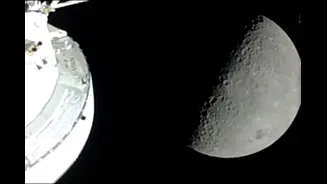
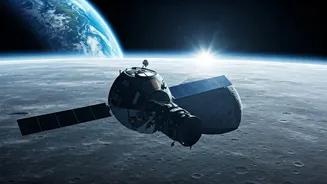
During their historic lunar flyby, the Artemis II crew achieved another significant milestone: they were the first humans to directly observe the far side of the Moon. The mission's trajectory involved maneuvering the Orion spacecraft into the Moon's gravitational sphere of influence, allowing them to circle the celestial body's uncharted hemisphere. As they navigated behind the Moon, the crew experienced a period of approximately 40 minutes without direct communication with mission control on Earth, a necessary consequence of their unique vantage point. From this unprecedented perspective, the astronauts captured detailed photographs of the lunar surface, documenting impact craters, ancient volcanic lava flows, and intricate geological features that offer invaluable insights into the Moon's formation and history.
Cosmic Spectacle Observed
Beyond the record-breaking distance and the views of the lunar far side, the Artemis II mission provided its crew with an extraordinary celestial spectacle: a nearly hour-long solar eclipse viewed from space. This rare event occurred due to a precise alignment between the Orion spacecraft, the Moon, and the Sun. The astronauts were treated to a unique perspective of the Sun's corona as it became visible around the Moon's edge, illuminating the otherwise unlit lunar surface. Furthermore, the crew witnessed up to six distinct light flashes, likely caused by meteoroids striking the Moon's surface. These observations, along with extensive data collected on lunar geography, are being meticulously shared with ground teams and will be discussed with lunar science experts in an upcoming broadcast.