






Summer Travel Strain
The peak summer travel season is unfolding against a backdrop of significant jet fuel scarcity and escalating prices. International aviation bodies have
issued stark warnings that fuel shortages are no longer a distant threat, but an immediate reality. Industry leaders have indicated that by late May, Europe might witness flight cancellations directly linked to insufficient jet fuel availability, with similar unsettling trends already emerging in parts of Asia. The core issue stems from heightened geopolitical tensions in the Strait of Hormuz, a crucial maritime passage for approximately 20% of the world's oil. Any prolonged disruption in this vital chokepoint inevitably leads to supply chain disruptions and wild price fluctuations throughout the global aviation sector. This precarious situation is forcing airlines to reassess their operations and strategies as fuel availability and its cost once again become dominant factors in decision-making, reminiscent of past oil crises.
Airline Adjustments Loom
The consequences of the burgeoning fuel crisis are already becoming apparent across the aviation landscape. European airlines are proactively modifying their flight schedules, accelerating the retirement of older aircraft, and even grounding entire fleets due to the increasingly prohibitive economics of fuel. Airlines are faced with the unenviable task of making difficult choices, predominantly centered around reducing flight capacity, absorbing significant financial losses, or shifting these increased expenses onto the passengers. In more extreme cases, some carriers have temporarily suspended their cargo operations and are strategically dropping less profitable or marginal routes from their networks. While a complete, widespread grounding of aircraft hasn't materialized globally, the warning signs are undeniably present. The availability and cost of fuel are once again dictating airline operational strategies, mirroring patterns observed during previous major oil price shocks.
India's Position
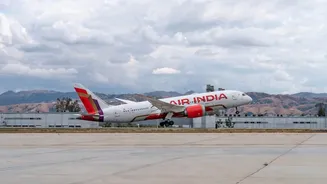
Although India is not currently experiencing direct physical shortages of aviation fuel, it remains significantly vulnerable to the global crisis. The pricing of Aviation Turbine Fuel (ATF) within India is intrinsically tied to international crude oil market fluctuations, meaning any sustained surge in global prices immediately translates into considerable pressure on the operating costs for Indian airlines. Compounding this issue, ATF already constitutes a substantial portion of an Indian airline's expenditure, typically ranging between 35% and 45% of overall operational costs, a figure notably higher than the global average, largely due to prevailing taxes and specific pricing structures. For prominent Indian carriers like IndiGo and Air India, the challenge is multifaceted: they must effectively manage escalating fuel expenditures while simultaneously pursuing ambitious plans for expanding their flight capacities. IndiGo, with its dominant domestic market share and a fleet composed of relatively fuel-efficient aircraft, is better equipped to weather short-term economic shocks. In contrast, Air India, currently undergoing a significant transformation and fleet modernization initiative, faces a more intricate balancing act between stringent cost control measures and its overarching growth objectives.
Fare Dilemma Unfolds
A critical question emerging from this situation is the extent to which airlines can effectively transfer the burden of rising ATF costs to their passengers. The reality is, they can only do so partially. India's aviation market is exceptionally sensitive to price, and any sharp escalation in ticket fares risks significantly suppressing passenger demand, particularly within the domestic sector. This creates a challenging scenario where airlines are forced to absorb higher operational expenses without the ability to fully recoup them through ticket prices. This dynamic intensifies the competitive landscape, often referred to as a 'price war.' Airlines engage in aggressive competition to maintain their market share, frequently keeping fares at artificially low levels even when their input costs are on the rise. The inevitable outcome is a reduction in profit margins across the industry, a long-standing challenge for India's aviation sector.
Fleet Strategy Under Pressure
The escalating cost of fuel is already exerting influence on global fleet acquisition and retirement strategies, a trend that is likely to extend to India. Airlines may begin to prioritize the procurement of newer, more fuel-efficient aircraft while simultaneously accelerating the phasing out of older, less economical models. This shift has a direct and significant impact on the aviation maintenance, repair, and overhaul (MRO) sector, redirecting demand from the heavy maintenance of aging aircraft towards more advanced, predictive maintenance solutions for modern fleets. If fuel prices remain elevated, Indian carriers might also be compelled to re-evaluate the profitability of specific routes, potentially reducing flight frequencies on less lucrative sectors and concentrating resources on high-yield routes. While a widespread grounding of aircraft is improbable for Indian airlines at this juncture, selective adjustments to operational capacity cannot be entirely dismissed.
Sustainable Aviation Fuel
Interestingly, this unfolding fuel crisis coincides with the broader aviation industry's intensified focus on sustainability. India's roadmap for Sustainable Aviation Fuel (SAF) aligns with the International Civil Aviation Organization's net-zero emission targets, proposing blended fuel levels of 1% by 2027, 2% by 2028, and 5% by 2030 for international flights. However, SAF currently carries a price tag that is three to five times higher than conventional jet fuel, rendering it an impractical short-term solution for mitigating immediate cost pressures. Furthermore, the allocation of suitable feedstocks presents a significant hurdle. Although India possesses approximately 10% of the global potential for bio-feedstock, only a fraction of this resource is currently being utilized. A critical issue is prioritization; aviation has a more urgent need for biofuels compared to road transport, which has alternative solutions like electrification. Without clear policy directives, there's a risk of misallocation, where ethanol might be diverted away from aviation purposes, thereby undermining the long-term development and availability of SAF.
Future Preparedness Key
Globally, aviation organizations are advocating for coordinated responses, ranging from fuel rationing frameworks to the implementation of slot relief mechanisms to manage potential disruptions. In India, while the situation has not yet reached a critical stage, the current circumstances underscore the imperative for proactive policy interventions. Rationalizing ATF taxes, enhancing the resilience of the fuel supply chain, and offering accelerated incentives for SAF development could significantly bolster the industry's ability to withstand future shocks. Learning from the fuel challenges experienced in Europe, it's evident that delaying action until shortages materialize is a flawed approach. True preparedness must always precede any disruption.
Navigating Tighter Margins
As the summer travel season intensifies, the Indian aviation sector finds itself in a precarious balancing act. Consumer demand remains robust, fleet expansion initiatives are in motion, and the overall market outlook is fundamentally positive. Nevertheless, the upward trend in ATF prices and global supply uncertainties introduce a significant element of unpredictability that cannot be overlooked. For airlines, navigating this period successfully will hinge on disciplined capacity management, rigorous cost optimization strategies, and astute pricing decisions. The broader aviation ecosystem, encompassing MRO providers, aircraft leasing companies, and fuel suppliers, will also face significant tests of their resilience and adaptability in the coming months. While the global fuel crunch may not lead to widespread grounding of Indian fleets, it is undeniably reshaping the economic landscape of air travel. In a market as intensely competitive as India, even minor shifts in cost dynamics can trigger far-reaching consequences.