








Navigating Job Loss
Experiencing a layoff or job termination can be financially daunting, impacting your savings and potentially leading to debt if not managed carefully.
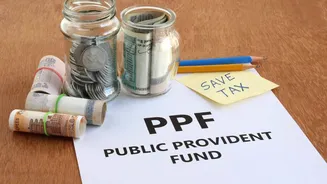
To support individuals during such challenging times, the Employees' Provident Fund Organisation (EPFO) has introduced simplified withdrawal procedures, making it easier for members to access their accumulated provident fund amounts. The organization has streamlined its withdrawal categories from thirteen down to three broad groups: Essential Needs, Housing Needs, and Special Circumstances. This consolidation aims to provide members with a clearer understanding of when and how they can access their funds. Withdrawals related to unemployment now fall under the 'Special Circumstances' category, offering a defined pathway for financial assistance.
Unemployment Withdrawal Policy
When faced with unemployment, EPFO's revised rules empower you to make partial withdrawals from your Employees' Provident Fund (EPF). Initially, you can withdraw up to 75% of your total EPF balance, which includes both your contributions and those made by your employer, along with accumulated interest. Should you remain unemployed for a full 12 months, the remaining 25% of your PF balance becomes accessible. This provision is designed to prevent individuals from depleting their entire savings at once and to ensure they benefit from the compounding interest, currently at 8.25%, on the retained portion. The intention behind retaining this 25% is to safeguard a respectable corpus for your retirement, providing a vital safety net and long-term social security.
Conditions for Full Withdrawal
While the revised framework prioritizes partial withdrawals during job loss, EPFO does permit a complete withdrawal of your entire PF balance under specific circumstances. These include reaching retirement age (typically 55 years of service), experiencing permanent disability or incapacity to work, undergoing retrenchment, opting for voluntary retirement, or making the decision to permanently leave India. It is important to note that these revised rules do not alter your pension entitlements at the age of 58 years. Furthermore, accumulations in your Employee Pension Scheme (EPS) account can be withdrawn at any point within the first ten years of service if you haven't completed the minimum ten years required for a pension at retirement. Meeting the minimum ten years of EPS membership with consistent contributions is crucial to qualify for a pension upon reaching retirement age.