






EVs: The Road Ahead
Shifting to an electric vehicle (EV) presents a compelling solution for mitigating escalating fuel expenses, especially for those with consistent daily
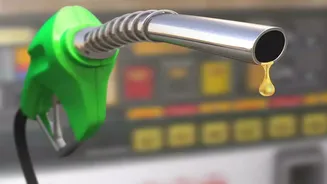
commutes. When examined on a per-kilometre cost basis, the economic advantage becomes strikingly clear. In India, petrol and diesel vehicles incur substantial annual fuel costs, potentially reaching up to Rs. 85,000 for petrol users and Rs. 1.2 lakh for diesel users in Delhi, assuming average daily usage and current prices. Even modest increases in fuel prices, which experts predict could be 10-20% due to global tensions, could add thousands to these annual expenses. In stark contrast, electricity costs are far more stable and regulated. An average urban household consuming 400 units monthly at Rs. 5 per unit incurs an annual electricity bill of approximately Rs. 24,000. A hypothetical 10% tariff hike would only add about Rs. 2,400 annually. This relative stability in electricity pricing, compared to the volatility of fossil fuels, is driving a broader consumer interest in electricity-powered alternatives like EVs, alongside induction cooking and rooftop solar, as strategies to manage household energy expenditures more effectively. These alternatives, however, come with their own set of initial investments, operational considerations, and varied savings potential, all of which warrant careful evaluation before commitment.
EVs: Government Boost & Hurdles
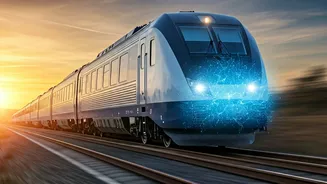
The financial viability of electric vehicles (EVs) is significantly enhanced by government policies and subsidies, which help reduce the initial purchase price. For instance, Delhi offers up to Rs. 1 lakh in scrappage-linked subsidies for four-wheeler purchases. On a per-kilometre basis, EVs are considerably more economical than their petrol or diesel counterparts. With petrol/diesel cars costing approximately Rs. 6.6 per km and EVs around Rs. 1.2 per km (based on average mileage, fuel/electricity prices, and consumption rates), the savings for high-usage scenarios are substantial, typically leading to a breakeven period of 4 to 8 years. Maintenance costs for EVs are also notably lower – often 1.5 to 2 times less over the vehicle's lifetime – due to fewer moving parts. However, the economics are heavily influenced by charging location; home charging at lower tariffs is significantly more cost-effective than public fast charging. Practical limitations include uneven charging infrastructure, especially for intercity travel, potentially higher insurance premiums, and evolving resale markets. Battery degradation is another concern, with replacement costs being a significant factor, though most manufacturers provide long warranties. An EV's increased electricity consumption, adding roughly Rs. 12,000 annually at Rs. 5 per unit, is still considerably less than traditional fuel costs and is further offset by rooftop solar integration.
Retrofitting: An EV Option
For those hesitant to purchase a new electric vehicle, retrofitting an existing internal combustion engine (ICE) car into an electric one offers a more accessible entry point. The cost for retrofitting a small car typically ranges from Rs. 3-6 lakh, a fraction of the Rs. 10-15 lakh or more for a new EV. This can lead to immediate savings of Rs. 4-6 per km at current fuel prices, with payback periods as short as 18-30 months for frequent users. As fuel prices become more volatile, retrofitting's cost advantage grows, further shortening the payback timeframe. This makes it a practical choice for reducing running costs without a new vehicle purchase, particularly for high-usage, city-based driving where daily commutes are predictable. However, the retrofitting landscape in India is still developing. It is crucial to use only government-approved kits and ensure proper post-conversion approvals from Regional Transport Offices (RTOs), adhering to Central Motor Vehicles Rules (CMVR) and AIS safety standards. Unlike factory-built EVs, retrofitted vehicles may face standardization challenges, and costs can vary widely based on battery and motor specifications. Safety, including battery systems, load distribution, and braking calibration, is paramount. Non-certified retrofits carry operational and legal risks. The ideal candidate for retrofitting is someone with regular, predictable city-centric mobility needs, such as drivers covering 40-60 km daily or fleet operators. It is less suitable for older vehicles or those requiring extensive highway range and fast-charging capabilities.
Rooftop Solar: Powering Savings
Rooftop solar systems have become increasingly attractive, not only for reducing electricity bills but also as a buffer against future tariff hikes. A household's satisfaction can be high, with systems often generating more power than consumed, leading to zero bills and even credits of Rs. 1,000-2,000 in low-consumption months. The upfront cost for a 3 kW on-grid system typically ranges from Rs. 1.5 lakh to Rs. 2.2 lakh, and Rs. 2.5 lakh to Rs. 3.2 lakh for a 5 kW system, though subsidies can significantly reduce this (e.g., a 3.3 kW system costing Rs. 1.8 lakh reduced to Rs. 1.2 lakh after subsidies). Maintenance is minimal, primarily requiring regular cleaning to prevent generation drops of 30-40%. Electricity generation varies seasonally, with summer months yielding more power (16-17 units/day) than winter or monsoon. Net metering allows surplus electricity to be exported to the grid for credits, which can offset future bills. The payback period, often 5-6 years for satisfactory systems, can be as low as 3-6 years in ideal conditions with higher consumption, or 6-10 years for many urban households. Systems can be on-grid (connected to the utility grid with net metering, but no power during outages), off-grid (independent, relying on battery storage, costly), or hybrid (grid-connected with battery backup, offering reliability but at a higher cost). A 1 kW capacity generally generates 4-5 units daily, suggesting a 3-4 kW system for a 300-400 units/month household. Subsidies under schemes like PM Surya Ghar Yojana further enhance affordability, supporting up to Rs. 78,000 for systems up to 3 kW.
Solar: Financial Viability
The financial sense of installing solar panels is highly dependent on individual household circumstances. Factors such as owning the roof, available space, electricity consumption levels, and local electricity tariffs play a crucial role. For households with low consumption or those renting their accommodation, the savings generated by solar power might not be sufficient to justify the initial investment. Battery storage, often integrated into hybrid solar systems, offers enhanced reliability by providing backup power during grid outages. However, the inclusion of batteries significantly increases the overall system cost. While they improve energy security, batteries do not always enhance financial returns to a degree that justifies their premium price, making them more beneficial for users prioritizing uninterrupted power over purely economic gains. Therefore, the decision to invest in solar power should be carefully weighed against these variables to ensure a favourable long-term financial outcome.
Induction Cooking: A Smart Switch
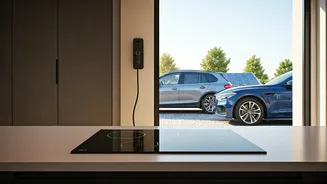
Beyond fuel and electricity bills, cooking fuel costs are a significant, often overlooked, household expense. Liquefied Petroleum Gas (LPG) remains the primary cooking source for most Indian households and is highly susceptible to global price shocks. Experts predict that LPG cylinder costs could structurally increase by Rs. 300-400 per cylinder in the medium term. To mitigate this, diversifying the cooking energy mix by incorporating electric alternatives, particularly induction cooktops, is becoming increasingly relevant. Induction cooking offers enhanced energy efficiency for certain tasks compared to gas flames, as it minimizes heat loss and reduces cooking times. While not a complete replacement for LPG, as many traditional cooking methods are better suited to gas, a split usage approach can help households stretch their LPG consumption and delay refills, especially during periods of volatile cylinder prices. This gradual shift may not drastically cut overall expenses but provides a strategic way to manage the impact of rising LPG costs and maintain budget stability. For example, induction cooktops are up to 85% efficient in energy transfer to food, compared to around 40% for gas stoves. While the initial cost of an induction cooktop can range from $500 to $2,000, the energy savings over time contribute to lower utility bills.